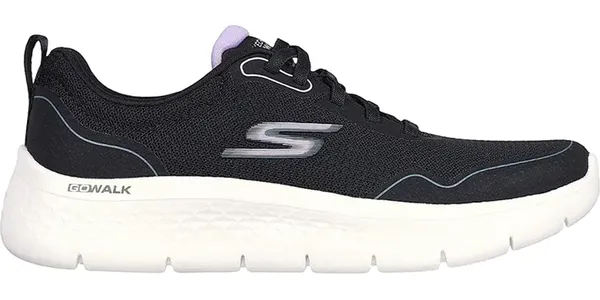
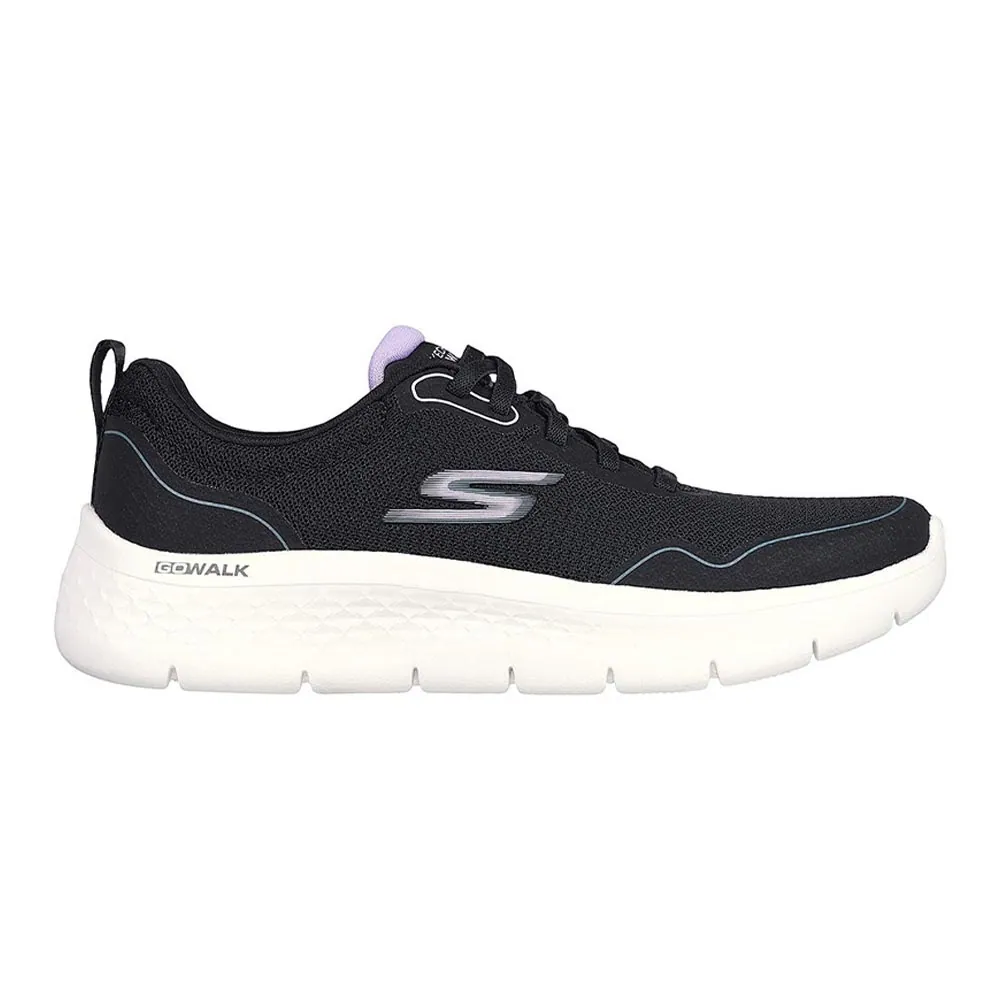
The details that matter
Underfoot: removable insole, soft foam and a rubberless sole
The top layer is the insole. Skechers calls it the Air-Cooled Goga Mat, breathable with high-rebound cushioning, and some versions also list an Ortholite foam insole layer. RunRepeat found the insole is Ortholite foam, 5.1 mm thick (a bit below average), and removable, so you can swap in your own insert.
Below it is the midsole, made of ULTRA GO foam, which Skechers describes as lightweight and responsive; some versions add a layer of Soft Stride foam. RunRepeat measured the foam as 21% softer than average (19.8 HA; the lower the number, the softer) with 56% energy return (how much bounce comes back), above average. RunRepeat says this adds a pep to your step and makes long walks less tiring.
The bottom layer is the part to know before buying. RunRepeat found no rubber outsole at all (0.0 mm), only textured exposed foam. Skechers calls it a flexible traction outsole, and some versions use Flex Pillars. The upside: it bends with the foot far more easily than average and grips wet concrete very well. The downside: the bottom foam is fairly soft compared with the walking-shoe average. When RunRepeat ground the sole with a Dremel, it left a 2.5 mm dent, almost 1 mm deeper than average. RunRepeat says daily wearers will most likely need a new pair sooner rather than later.
Upper: hugs like a sock, but breathes poorly
The pair RunRepeat tested has a one-piece mesh upper, just 2.0 mm thick, almost 2 mm thinner than average. The stretchy fabric hugs the foot like a sock and stayed comfortable when feet swelled late in the day.
On breathability, the brand and the test disagree. Skechers calls the upper on some versions a breathable textile and says the insole is breathable too, but RunRepeat found the mesh tightly woven with no ventilation holes. In the smoke test the smoke stayed trapped inside, and it scored only 2 out of 5 for breathability; RunRepeat does not recommend it for sunny days or summer. If you often walk outdoors in the daytime, weigh this before buying.
At the back is a finger loop for pulling the shoe on. The heel padding is soft but not durable: RunRepeat's durability test gave the heel padding only 2 out of 5, while the toe box is very tough at 5 out of 5. There are no reflective elements; if you often walk after dark, add reflective clothing or gear.
Versions in this family use different uppers. Skechers product pages list engineered mesh with slip-on stretch laces (Night Galaxy), engineered mesh with a lace-up front (Serenity), a laceless Stretch Fit knit (Talli) and a woven upper with twin gore panels (Impeccable II). Check which one you are buying.
What it is like to walk in
For walking around town, it does well. RunRepeat stayed comfortable through a 10-hour test, did not find the shoes a burden on long walks, got great grip on dry and wet concrete, and found the sole bends naturally with the foot.
Where opinions differ is stability. Skechers says Flex Pillars give stable traction on many surfaces, but RunRepeat gave it just 1 out of 5 in its twist test because it twists very easily, found no structure in the heel counter at all and concluded the shoe is not stable. What helps is a wider-than-average base, 112.5 mm at the forefoot and 92.5 mm at the heel, so RunRepeat still felt surefooted on long walks.
On flat feet, RunRepeat advises people with flat feet or overpronation (feet rolling inward when walking) to stay away, because it feels pretty much like a bedroom slipper with no arch support. Yet one customer with flat, wide feet, wearing them daily, all day, said it is hard to find shoes that work, but these are perfect; the sole adapts to any foot and the shoe never slides off. The two comments come from different angles: RunRepeat assesses how much the shoe supports the foot, while this customer describes their own wear. If you do not need that support, try a pair on before buying.
It is not waterproof, so your feet can get wet if you walk in heavy rain.
How to read this shoe's numbers
The key numbers come from RunRepeat's measurements. The heel stack is 33.0 mm, slightly above average, and the forefoot stack is 24.0 mm, so the drop (the difference between heel and forefoot thickness) is 9.0 mm, 1.3 mm below average. The thickness is nothing unusual, but the foam is 21% softer than average.
Skechers lists a 1 1/4-inch heel height (about 32 mm), close to RunRepeat's figure but measured differently. Use RunRepeat's numbers when comparing with other shoes.
For weight, RunRepeat weighed a women's US 11 at 219 g, 14.4% lighter than average. The brand-listed weight is 242 g. Weight changes with size, so in the store, lift it against other shoes in your own size.
One more number if you are taking it somewhere cold: after 20 minutes in a freezer, RunRepeat found the midsole foam became 53.2% firmer, far more than average.
Stack and drop
Heel 33.0 mm, forefoot 24.0 mm, drop 9.0 mm, slightly below average. These figures describe thickness, not softness; softness shows in the 19.8 HA foam reading (the lower the number, the softer), 21% softer than average. When trying it on, stand still and then walk for a while to see whether you like this soft, sinking feel.
Weight depends on size
219 g is for a women's US 11; larger sizes weigh more. In the store, lift it against other shoes in your size.
Check width at the toes
The toe box measures 99.5 mm at its widest, above average, but 77.7 mm at the big toe, slightly narrower than its category. Wiggle your toes and check for pressure on the side of your big toe.
What to check when trying it on, and what to look at instead
When you try a pair on, walk around the store for a while and check three things.
Heel: there is no heel structure, so walk briskly or go up and down stairs and see whether your heel stays in place.
Toes: the shoe is slightly narrower than its category at the big toe, so wiggle your toes and check whether the fabric presses on the side of your big toe.
Laces: Skechers told a customer that the Ultra's stretch laces are not designed to be tightened; you slip the shoe on. Some customers tie a small knot to snug the fit. If you want to adjust the fit yourself, look at a lace-up version; Skechers says the Ultra and the Independent are essentially the same design, differing only in lace type (stretch or tie) and fabric look.
If this shoe does not suit you, work out which point is the problem and choose on that basis. For support, look at walking shoes with a heel counter (the stiff structure around the heel) and a sole that resists twisting. For daily wear and a longer-lasting sole, look for a rubber outsole. For walking in the sun, look for an upper with ventilation holes.
Size and fit
Start with your usual size. In a RunRepeat reader poll of 494 votes, it came out true to size, and Skechers, answering a customer, said most reviewers find it true to size. A summary of 45 customer reviews notes that some found it ran big or the wrong length. If you can, try a pair on before buying.
RunRepeat says it fit as expected on their regular-sized feet. They measured the widest part of the toe box at 99.5 mm, 1.6 mm wider than average, but the width at the big toe is 77.7 mm, a little narrower than other shoes in its category; the stretchy fabric keeps it comfortable.
There is no heel structure. The upper is one piece of fabric that RunRepeat says hugs the foot like a sock, and one customer with flat, wide feet said the shoe never slides off.
The men's version comes in Medium (D), and select colours in Extra Wide (4E), according to Skechers US on the Ultra page. One customer who ordered a US 15 Extra Wide said the width is great but it is a little too long, and the sole reads 15-16. If you have very large feet, try a pair on or check the exchange terms before ordering online.
Black/Lavender US:6Black/Lavender US:5.5Black/Lavender US:7
สเก็ตเชอร์ส-รองเท้าผู้หญิง-women-gowalk-flex-shoes-124977-bklv · 2026-11-24 · Recorded sizes, not current stock