The details that matter
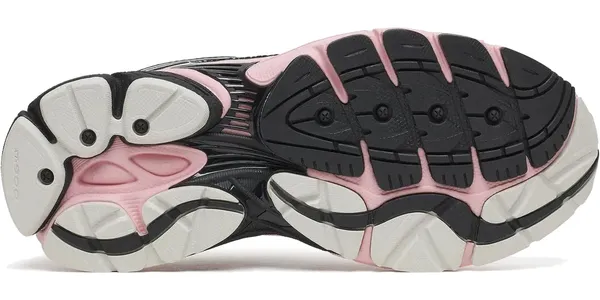
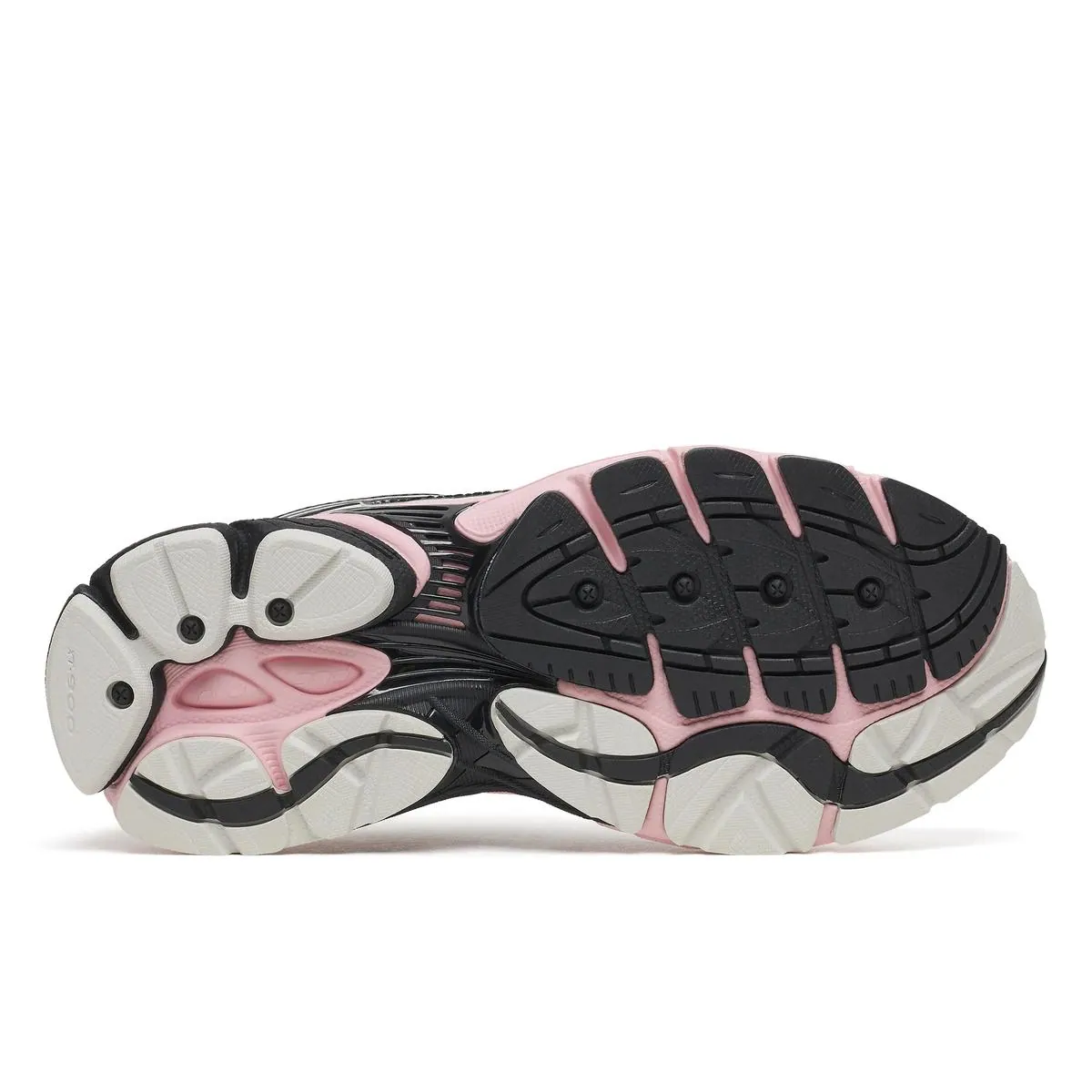
Underfoot: dual-density foam, a broad base, tough rubber
The midsole uses two densities of foam: a softer foam runs the full length for comfort, with firmer units added at the heel and forefoot for stability. RunRepeat measured the soft foam at 38.5 AC (a foam hardness reading; lower is softer), softer than a typical sneaker midsole, and the firm foam at 55.8 AC, so the ride feels balanced but leans firm. Saucony says its GRID cushioning and ProGrid technology spread impact through each stride.
At the heel, RunRepeat measured 111 SA of shock absorption (higher means more impact absorbed): above the sneaker average (88 SA) but below modern running shoes, which average 130 SA. That is enough for walking and long standing, not for running. Heel energy return of 58.3% (average 50%) makes it notably more responsive than the average sneaker, with a pleasant pep in each step.
The base is broad, 116.5 mm at the forefoot and 91.7 mm at the heel, so it feels steady from the moment the foot lands. It takes about 13% more force to bend than average and resists twisting more than average. Toe spring is modest and the heel is barely bevelled, which RunRepeat does not see as a major drawback given the moderate stack.
The outsole is XT-900 carbon rubber, 4.6 mm thick. In RunRepeat's Dremel test it lost only 0.7 mm, and its friction coefficient of 0.70 makes it about 40% grippier than the average sneaker, on wet concrete and smooth mall tiles alike.
Upper: airy mesh, but thin
The upper is open mesh with suede and leather overlays; some colourways use synthetic overlays. A TPU cage on the outer side of the midfoot holds the foot in place and stops it sliding sideways.
The mesh breathes very well: RunRepeat's smoke test gave it the top 5/5, which suits hot weather. It is also thin. In the abrasion test the toe-box mesh was destroyed within seconds, scoring 1/5, while the inner heel lining held up better at 3/5. If you tend to scuff your toes on steps or drag your feet, keep this in mind.
The tongue has up to 10.5 mm of padding, which keeps lace pressure off the top of the foot. It is not gusseted, so it can shift sideways a little. Inside the heel is a heel counter (the stiff shell around the heel), which RunRepeat rated 4/5 for stiffness; it keeps the heel locked in place.
On materials, KickzStand and All About Anthony agree they are not premium, but the build is solid and clean. Some owners collected by Solefeed praise the suede as better than the New Balance 530's. If you need protection from drizzle and splashes, RunRepeat notes a waterproof GTX version is available.
How it feels: comfortable from day one, fine for long days on your feet
The Sole Supplier praises its comfort straight out of the box, and the All About Anthony author, wearing it casually, calls the comfort excellent. A padded insole, up to 4.8 mm thick at the heel, adds to that first step-in feel. One owner collected by Solefeed wears it for 12-hour shifts of 15,000+ steps and finds it comfortable; another sees its heel cushioning as an advantage over the NB 530 and Nike Vomero 5 for long standing.
People describe the cushioning differently. RunRepeat says the ride leans firm but has a pleasant pep. One owner says the heel feels like walking on a trampoline; another calls it comfortable with some firmness. RunRepeat's numbers help explain this: it absorbs more impact than a typical sneaker but less than a modern running shoe. If you are used to thick, soft running shoes, it will feel firmer.
For running, RunRepeat does not recommend it for jogging, but calls it a nice companion for long walks and commutes.
On durability, one owner has used it as a daily beater for 2 years and says it still feels brand new. A midsole depression Solefeed noted came from a single Foot Locker pair, which Solefeed treated as unusual, not a common problem.
How to read this shoe's numbers
All figures here come from RunRepeat: heel stack 31.5 mm, forefoot stack 21.0 mm, drop (the difference between heel and forefoot thickness) 10.5 mm, weight 323 g.
A 31.5 mm heel stack is close to RunRepeat's average (30.5 mm): not a platform, not ground-hugging. A 10.5 mm drop is the most common offset for walking shoes; the heel sits noticeably higher than the forefoot, so people used to flat shoes will notice the difference when trying it on.
The 323 g weight is about 2 oz lighter than the average sneaker according to RunRepeat. When trying it in a shop, hold it next to the pair you wear now.
The toe-area numbers matter most for this shoe. The widest part of the forefoot is 96.4 mm (average 92.4 mm), but the width at the big toe drops to 66.4 mm (average 68.7 mm) and the height above the toes is 24.5 mm (average 27.7 mm). The forefoot is wide, but the tip of the toe box is tapered and low. Internal length is 275.3 mm, slightly longer than average (272.2 mm).
Drop and stack
A 10.5 mm drop is common for walking shoes; the heel sits noticeably higher than the forefoot. The 31.5 mm heel stack is moderate, not a platform. If you are used to flat shoes, walk around the shop for a while to see whether the higher heel feels right.
Toe box: wide mid-forefoot, tapered tip
The widest part of the forefoot is wider than average, but the big-toe area is narrower and the height above the toes is lower than average. When trying it on, wiggle your toes to check for room and press the top to see whether it touches your toes.
Weight
RunRepeat weighed it at 323 g, about 2 oz lighter than the average sneaker. In the shop, hold it next to the pair you wear now.
What to check when trying it on, and what to compare
When trying it on, wear the socks you plan to use, lace it snugly and walk around the shop for a while. Check three things: whether your big and little toes feel squeezed, whether the top presses on your toes, and whether your heel lifts as you walk. If you use your own insoles, bring them: the stock insole is removable, but the low toe box may not fit every insert.
If the toe box is too tight, RunRepeat points to the ASICS Gel 1130 and Nike Zoom Vomero 5, similar retro runners with a rounder toe box and more room above the toes. One owner collected by Solefeed, though, sees the Omni 9's heel cushioning as an advantage over the NB 530 and Vomero 5 for long standing. If you also want to jog, look at a modern running shoe with more shock absorption.
Size and fit
Size: KickzStand and All About Anthony say it runs true to size. One owner of 3 pairs says all fit true to size, in normal to thick socks.
Wide feet: Solefeed sums up that normal or narrow feet can take their usual size, while most wide-footed wearers go half a size up; KickzStand also suggests half a size up for wide feet. Views on the forefoot differ: one owner finds it friendlier to wide feet than the NB 1906 and 2002, another finds the toe box snugger than the ProGrid Triumph 4, and RunRepeat says a tight forefoot is a common complaint. The forefoot is wide but the tip tapers, so some find it comfortable and others find it tight.
Coming from New Balance: one owner went from US 9 in NB to 9.5 in the Omni 9.
Fit varies by colourway: some owners collected by Solefeed say Crystal Cave fits snugger than Jae Tips in the same size, and colourways with plastic cage overlays feel tighter than those with leather cages. If one colourway fits you, try on a new one before buying.
Heel: a stiff, well-padded heel counter holds the heel in place.
55.566.577.588.599.5101112
S101155-1068 · 2026-11-24 · Recorded sizes, not current stock