Skip to content
7 sources

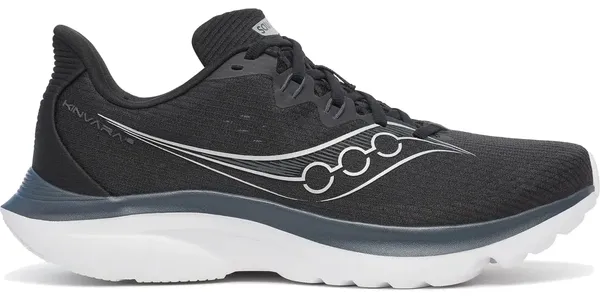
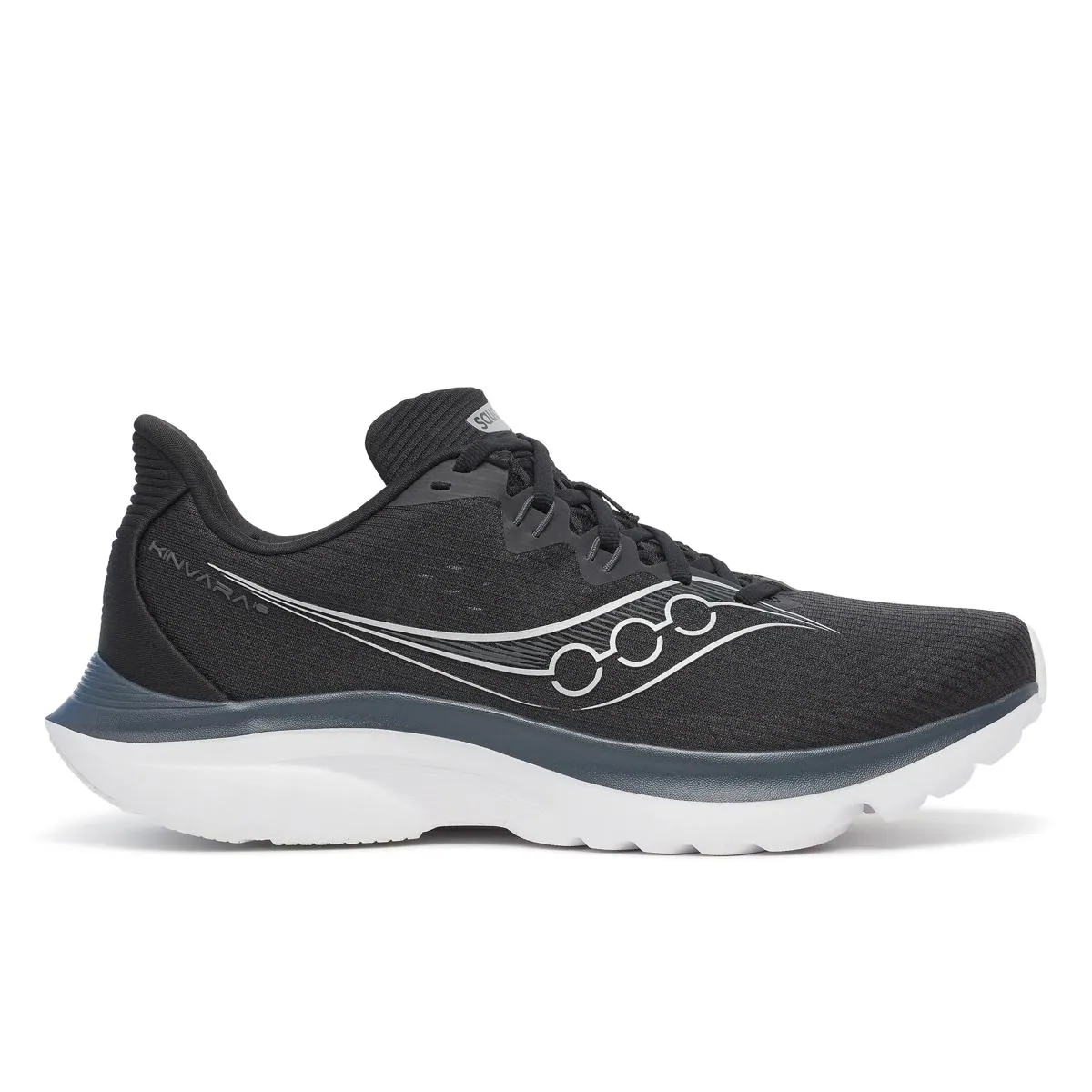
Saucony Kinvara 16

Men's and women's road running shoe · for runners who like a light, low-drop shoe that isn't thick underfoot, for daily miles and faster days

The short answer

The Kinvara 16 suits runners who want a light road shoe that isn't thick underfoot, with a 4 mm drop, for short-to-medium training and faster days such as tempo runs, track sessions or 5–10 km races. If you want deep, soft cushioning for long runs or slow recovery days, it does not fit that brief.

Price & retailers

฿3,633Listed price · feed received · 2026-11-14

If you have a Shopee voucher

  • 10% codeabout ฿3,270
  • 20% codeabout ฿2,906
  • 30% codeabout ฿2,543

The real price depends on the vouchers in your account, their conditions and participating shops. Check the final total in your cart.

View on Shopee ↗

revrunnrshop

Colour & price scope

Price of this listing in the Shopee feed on the date shown. Other colours or sizes may differ; check the shop for the current price.

Feed retrieved 2026-11-14T08:42:03.807776+00:00 · The feed has no seller update time. Check the listing for the price and size you buy.

Is it right for you?

What stands out

  • Light. Saucony lists the men's shoe at 206 g; testers say it felt very light from the first wear and seemed to disappear on steady runs.
  • The dual-layer mesh upper breathes very well: RunRepeat gave it 5/5 in its smoke test, and two testers had no rubbing or blisters.
  • The heel and tongue stay put. The tongue is stitched to the upper on both sides, and testers say the heel holds securely and the tongue stays put.
  • Comfortable from day one, with no break-in period.

Trade-offs

  • The ride is fairly firm and absorbs less shock than most daily trainers. Several sources say it is less suited to marathons, easy recovery days or heavier runners.
  • Most of the outsole is exposed foam, with rubber only under the big toe and the outer heel. Alastair Running saw minor wear after a week of running, and RunningShoesGuru at just over 50 miles (80 km). Both expect around 300+ miles (about 480 km) if they choose surfaces carefully.
  • Reports on width differ: RunRepeat recommends it for narrow feet and not for wide feet, while a NextGait tester with a slightly wide forefoot found generous room for the toes to spread. If your feet are wide, try it on before buying.
  • It is not a bouncy shoe. Labs measured low energy return, so if you want a very energetic, fast feel or the snap of a plated shoe, look elsewhere.
The short version: who it suits

The Kinvara 16 is a simple road shoe: no plate and no top-tier foam. What it offers is low weight, a sole that isn't thick and a low 4 mm drop. Saucony designs it for everyday training and for days when you want to run faster. Alastair Running finds it most fun on tempo runs, track sessions and shorter non-plated races, and RunningShoesGuru calls it a great option for racing and track workouts. RTINGS scores it 6.9/10 for 5–10 km racing, higher than its 4.9/10 for marathon racing. Alastair Running likes it for efforts up to 10 km, or longer if you are already used to thinner cushioning, and says it can go up to a half marathon for the right runner. The trade-offs: the ride is fairly firm, it absorbs less shock than most daily trainers, and the exposed-foam outsole wears quickly. Several sources say it is less suited to runners who want deep, soft cushioning or to heavier runners. If you want to try a low-drop shoe without going straight to a minimal design, RunRepeat sees this as a good starting point.

Manufacturer information, lab findings, editorial reviews, community discussions, video reviews · View sources

Illustrative outsole texture

What people who wore it say

Most testers praise the low weight, comfort from day one, a secure and breathable upper, and how fun it is on tempo and speed runs. The shared complaint is fast wear on the exposed-foam outsole. On bounce, opinions differ: some felt it was livelier than the Kinvara 15, while labs measured low energy return and one viewer called the midsole boring.

Saucony Kinvara 16.

Source · Captured 2026-11-17

A commenter under a Kinvara 16 review video on YouTube wrote that, apart from average durability, the shoes are incredible.

Read source ↗

Saucony Kinvara 16.

Source · Captured 2026-11-17

Another commenter under the same video wrote simply: ‘Boring midsole’.

Read source ↗

Saucony Kinvara review

Reviewer · Captured 2026-11-17

NextGait's tester (182 lb, about 83 kg) found the pair still runnable at 359 miles (about 578 km), with about 1.6 mm of outsole smoothing and noticeably creased, softened foam, but an intact upper.

Read source ↗

Saucony Kinvara 16 review

Reviewer · Captured 2026-11-17

RunningShoesGuru's tester, who had lately worn only high-stack trainers, found the ground feel strange at first but enjoyed it more the longer they ran in it.

Read source ↗

Saucony Kinvara 16 Review

Reviewer · Captured 2026-11-17

Alastair Running says it quickly became one of his favourite tempo and daily speed shoes.

Read source ↗
Kinvara 16

Ready to choose?

฿3,633Listed price · feed received · 2026-11-14
View on Shopee ↗

Listing price; the listing may show a different colour.

Specifications

Gender
Men
Heel stack (mm)
28
Upper
Lightweight mesh upper with a 3D molded heel cup keeps your foot cool, secure, and dialed in.
Weight (g)
206
Cushioning
Lightweight cushion
Drop (mm)
4
Midsole
PWRRUN
Outsole
Mostly exposed PWRRUN foam with two small XT-900 rubber patches
Support
Neutral
Forefoot stack (mm)
24

www.saucony.com · 2026-11-24

Specifications from manufacturer information and the listed sources

Common questions

Who is Kinvara 16 for?

The Kinvara 16 suits runners who want a light road shoe that isn't thick underfoot, with a 4 mm drop, for short-to-medium training and faster days such as tempo runs, track sessions or 5–10 km races. If you want deep, soft cushioning for long runs or slow recovery days, it does not fit that brief.

What should I know about size and fit?

Size: every source that comments says it runs true to size: RunRepeat, RunningShoesGuru, Alastair Running (men's US 9) and NextGait (men's US 10.5, standard D width). Width: reports differ with each person's feet. RunRepeat recommends it for narrow feet looking for a light running shoe and not for wide feet; it measured the sole width at the heel at 86.5 mm and calls it narrow. Alastair Running says the upper fits his average-width feet very well, while a NextGait tester with a slightly wide forefoot found the length correct and generous side-to-side room for the toes. If your feet are wide, try it on before buying and check for side pressure at the forefoot. Toe-box height: RunRepeat measured 28.9 mm of height inside the toe box, enough that pressure on the big toenail is unlikely. Heel and midfoot hold: Alastair Running describes a secure, racing-shoe-style lockdown through the midfoot and heel. NextGait could adjust midfoot tension securely and had no meaningful heel slip.

What should I try or compare before buying?

When you try it on, wear the running socks you actually use, lace it snugly, and check three things: whether your toes can spread and the sides of the forefoot feel squeezed, whether your heel lifts on a light jog, and whether the sole feels too firm for the distances you run most. If you usually wear thick-soled or higher-drop shoes, start with short runs and see how your calves feel. Compared with other shoes: Alastair Running says the nylon-plated Endorphin Speed 5 feels less minimal than the Kinvara 16. The Kinvara 16 is a neutral shoe with no support system, so if you need support, look at shoes built with it. NextGait found the Mizuno Wave Rider 29 more stable, while the Kinvara let the forefoot move more naturally.

The details that matter

Under the foot: PWRRUN foam, no plate, rubber only where wear is highest

The midsole is a new blend of PWRRUN foam, which Saucony says is more responsive and more durable. The sidewalls are lower and the inner midfoot is straighter to help smooth transitions, and Alastair Running found transitions smooth and natural. RunRepeat describes a classic forefoot rocker and a pronounced heel bevel. There is no plate, so the sole still twists and bends. RunRepeat measured torsional rigidity of 9.3 Nm, which counts as flexible; its 12.0 N bend test still leans flexible but is stiffer than earlier versions. On softness, RunRepeat measured the foam at 27.5 HA, on the firmer side and firmer than the previous version. RunningShoesGuru, Alastair Running and NextGait all describe a fairly firm but responsive ride. On top of the foam sits a removable 4.6 mm FormFit insole (RunRepeat). Testers say it slightly softens the moment your foot lands without dulling the feel of the ride. The outsole is almost entirely exposed foam, with XT-900 carbon rubber in just two spots: under the big toe and the outer heel. Two testers advise choosing your running surfaces carefully so the exposed foam lasts.

Upper: breathable mesh and a secure heel

The upper is a two-layer engineered mesh, with a thicker net-like inner layer. RunRepeat's smoke test showed excellent airflow through the toe area, earning 5/5 for breathability. RunningShoesGuru says the mesh is less see-through than the Endorphin Pro and Endorphin Speed but still breathable. RunRepeat also praises the mesh as much better made than in earlier versions. The tongue is stitched to the upper on both sides and thinly padded at 4.9 mm. Testers say it stays in place, and NextGait had no lace bite. The laces run through punched eyelets plus two lace loops on each side. At the back is a 3D-molded heel cup, new for version 16. RunRepeat rates the heel counter (the stiff structure wrapping the heel) 3/5 for stiffness. Testers from RunningShoesGuru and Alastair Running wore ankle socks and had no heel slip or irritation. Two things to know: there is no reflective detail on the heel, so add reflective gear if you run on roads after dark. And NextGait had minor friction near the bone on the little-toe side of the foot during a hot, exposed 14-mile (about 22.5 km) run with heavy sweat.

On the run: fun as the pace rises, thin when you slow right down

Several testers say the Kinvara 16 becomes clearly more fun as the pace rises. Alastair Running says it quickly became one of his favourite tempo shoes. NextGait says that between easy and steady pace (roughly 4:21–5:26 min/km, or 7:00–8:45 min/mile) the forefoot flexes with the foot, the heel stays quiet and the light shoe is easy to place. You feel the road clearly. RunningShoesGuru, who had lately worn only high-stack trainers, found it strange at first but enjoyed it more with every run. Alastair Running says it rewards midfoot or forefoot landings with quick steps, and warns that if you are not used to a low drop your calves work harder and may feel sore after your first few runs. On bounce, the evidence splits. RunningShoesGuru and Alastair Running felt better energy return than the Kinvara 15, but RunRepeat measured 50.3% at the heel and 53.6% at the forefoot, lower than the 15, and describes the foam as muted rather than bouncy. RTINGS scores energy return just 4.2/10. If you like a bouncy ride, test-run it before deciding. When you slow down or hold hard efforts for long, NextGait (a 182 lb, about 83 kg, runner) noticed the limited cushioning more than the low weight on very slow recovery runs, and found that on sustained threshold work the shoe performs but lacks the snap of a plated trainer. Stability and grip: RTINGS scores lateral stability 8.5/10 and RunningShoesGuru handled tight turns fine, but NextGait says it offers less protection and stability once fatigue breaks down your form. RunRepeat measured traction at 0.52, up from 0.41 on the Kinvara 15, and calls it reliable on dry and wet surfaces; Alastair Running finds grip fine on dry roads, concrete and gravel and expects decent performance in light wet, but calls traction the only area that lets the shoe down. Durability: NextGait's pair was still runnable at 359 miles (about 578 km), with about 1.6 mm of outsole smoothing and foam that had creased and softened noticeably, while the mesh, eyelets and heel structure stayed intact. RunRepeat's Dremel test wore 2.0 mm off the 2.7 mm heel rubber and gave the upper's toe area 1/5 for durability.

Reading the numbers: drop, stack and weight

Drop (the difference between sole thickness under the heel and under the forefoot): Saucony lists 4 mm, with 28 mm under the heel and 24 mm under the forefoot. RunRepeat measured close to that: 28.0 mm under the heel, 23.5 mm under the forefoot, a 4.5 mm drop. RTINGS measured 30.8 mm under the heel and 23.7 mm under the forefoot, giving 7.1 mm. Alastair Running and NextGait give about 29 mm at the heel, about 25 mm at the forefoot and a 4 mm drop. If you usually wear a higher drop, your calves may need time to adapt. Stack and cushioning: RunRepeat calls the stack moderate and says the forefoot is thin enough to feel the road clearly. Saucony gives it 2 out of 5 cushioning bars, and RTINGS scores cushioning 5.7/10. RunRepeat measured shock absorption at 109 SA in the heel and 100 SA in the forefoot, less than most daily trainers, and sees it as suited to short and medium runs. Weight: Saucony lists 206 g for men and 179 g for women without stating the size. Alastair Running lists his own men's US 9 pair at 207 g, close to RunRepeat (207 g) and RTINGS (207.6 g). RunRepeat notes it is 7% heavier than the Kinvara 15 but still a lightweight running shoe. When comparing with other shoes, compare the same gender and size.

4 mm drop: check how your calves adapt

Saucony lists a 4 mm drop; RunRepeat measured 4.5 mm and RTINGS 7.1 mm. If you usually wear a higher drop, start with short runs. Alastair Running says runners not used to a low drop may have sore calves after the first few runs.

Firm, thin sole: test-run it on a hard surface

Saucony gives it 2 out of 5 cushioning bars, and RunRepeat measured the foam at 27.5 HA, on the firm side. When trying it on, jog on a hard floor for a bit; if it feels too firm for the distances you run most, look at a thicker-soled shoe.

Compare weight at the same size

Saucony lists 206 g for men and 179 g for women; Alastair Running lists his men's US 9 pair at 207 g. When comparing with other shoes, match gender and size.

What to check when trying it on, and what to look at instead

When you try it on, wear the running socks you actually use, lace it snugly, and check three things: whether your toes can spread and the sides of the forefoot feel squeezed, whether your heel lifts on a light jog, and whether the sole feels too firm for the distances you run most. If you usually wear thick-soled or higher-drop shoes, start with short runs and see how your calves feel. Compared with other shoes: Alastair Running says the nylon-plated Endorphin Speed 5 feels less minimal than the Kinvara 16. The Kinvara 16 is a neutral shoe with no support system, so if you need support, look at shoes built with it. NextGait found the Mizuno Wave Rider 29 more stable, while the Kinvara let the forefoot move more naturally.

Size and fit

Size: every source that comments says it runs true to size: RunRepeat, RunningShoesGuru, Alastair Running (men's US 9) and NextGait (men's US 10.5, standard D width). Width: reports differ with each person's feet. RunRepeat recommends it for narrow feet looking for a light running shoe and not for wide feet; it measured the sole width at the heel at 86.5 mm and calls it narrow. Alastair Running says the upper fits his average-width feet very well, while a NextGait tester with a slightly wide forefoot found the length correct and generous side-to-side room for the toes. If your feet are wide, try it on before buying and check for side pressure at the forefoot. Toe-box height: RunRepeat measured 28.9 mm of height inside the toe box, enough that pressure on the big toenail is unlikely. Heel and midfoot hold: Alastair Running describes a secure, racing-shoe-style lockdown through the midfoot and heel. NextGait could adjust midfoot tension securely and had no meaningful heel slip.

60309M-S21020-200 · 2026-11-24 · Recorded sizes, not current stock

Other shoes to compare

If the Kinvara 16 doesn't suit you, choose by what you want more of: for soft, thick cushioning on long or recovery runs, look at high-stack daily trainers with soft foam; for more snap on sustained hard efforts, look at plated trainers; if you want the shoe to guide your foot, look at shoes with support features.

Explore more reviews
All 10 source records and our method

This review combines Saucony's men's and women's product pages with six independent sources. Two labs, RunRepeat and RTINGS, take instrument measurements. RTINGS buys its own shoes rather than taking them from brands, and may earn commission from retailer links. RunningShoesGuru also bought its pair with the site's own money, takes no free samples and uses affiliate links, including Amazon. Alastair Running wore men's US 9 for daily training and tempo runs. NextGait ran 359 miles (about 578 km) with a 182 lb (about 83 kg) tester in US 10.5, with long runs up to 20 miles (about 32 km) on asphalt, wooden boardwalk and in the wet. The last source is a YouTube review after 300 km plus its viewer comments. Brand information, lab results, editorial opinion and wearer experience are kept separate by source.

This review combines the sources listed on this page. Most findings are at model level and may not cover every colour or size.