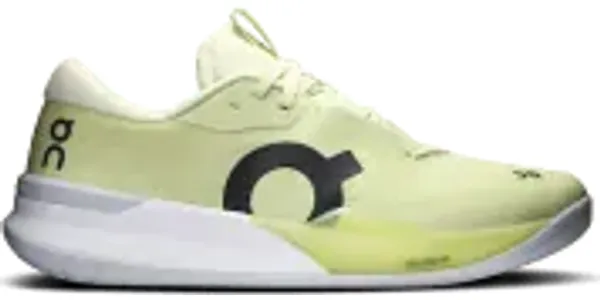
The details that matter
Under the foot: Helion foam, a carbon plate and the outsole
Foam: On uses Helion HF, a high-rebound foam also found in its running shoes and used for the first time in an On tennis shoe. The brand says it is designed to return energy during explosive movements. Rackets & Runners describes it as a thin PEBA layer on top of the standard EVA, while Tennisnerd's launch article says this model moves away from the EVA of earlier versions.
Plate: a carbon-fibre Speedboard sits under the midfoot as a rigid base for lateral movement. Rackets & Runners says it still gives fantastic torsional rigidity. At the heel, On adds a new heel clip system to prevent foot roll.
Outsole: Rackets & Runners says it swaps the Roger Pro 2's herringbone for a diamond pattern, to reduce friction and make sliding on hard courts easier. The Second Serve says the diamond pattern harks back to the original Roger Pro. Tennisnerd describes a modified herringbone tuned for a grip-and-glide style. Turn the shoe over and look when you try it on.
Upper: close-fitting mesh and new lacing
The upper is a mesh that fits close to the foot and is a little stiffer than other mesh, which Rackets & Runners says minimizes rollover. The Rackets & Runners reviewer also says the upper is slightly softer and the lateral rubber piece is less intrusive, which removed the pressure they felt in the previous version.
On adds coated engineered mesh reinforcements, which it says are meant to improve durability and breathability. Across the midfoot sits a cage lacing system; On says it locks the foot down without adding excessive weight. Rackets & Runners says the new lacing pulls from deeper in the midfoot, so when you cinch it, the upper wraps the arch without pressure points on top of the foot.
Ben Shelton, an On-sponsored athlete involved in the design, says the early version was light but not very supportive in the upper, and it is now reinforced to the point that it looks like a premium shoe.
How it feels on court
Rackets & Runners calls it fast and predictable, with fantastic feedback from the court. It rides low to the ground, so you feel very planted and well balanced.
The new foam is a thin layer, so it does not feel springy like a runner, but when scrambling or making big lateral cuts it absorbs shock significantly better than the first two versions. The reviewer says the foot does not sink into the cushioning; the midsole snaps back quickly and helps you push off, keeping the responsiveness of a minimalist shoe with a little more explosiveness, and stability is not reduced at all. For players with exceptional footwork, they say it delivers incredible speed and precision, and much more security than other natural court shoes like it.
On sliding, the two sources look at different things. The Rackets & Runners reviewer did not test sliding because of an ankle injury; they expect it to slide better but do not think it will be the best sliding shoe on the market. Tennisnerd says it keeps the rigid stability needed for professional-level sliding.
How to read the numbers
Drop (the difference between sole thickness under the heel and under the forefoot) is listed at 8 mm. It does not tell you whether the sole is soft or firm.
On lists the weight at about 428 g (15.1 oz) for men's US 10.5; other sizes will weigh differently. On says this version is 10 g lighter than the Roger Pro 2.
On does not list a stack height. When you try it on, notice how low and close to the ground it feels compared with your current court shoe.
Check fit in three places
Lace it snugly, then check whether your toes can spread, whether the outer edge and midfoot feel pressure, and whether your heel lifts as you step. The fit is close; if you usually wear wide shoes, try it on before buying.
8 mm drop
Judge softness or firmness when you try it on: stand still first, then move side to side and stop a few times.
About 428 g (US 10.5)
This is the weight On lists for men's US 10.5. To compare, hold it against your current court shoe in the same size. On says it is 10 g lighter than the Roger Pro 2.
What to check on try-on, and what to compare if it doesn't suit
Lace it snugly through the midfoot cage first, then check three things: whether your toes can spread, whether the outer edge of your foot feels pressure, and whether your heel lifts as you step. Shuffle side to side quickly and stop suddenly a few times. If you have very high arches, pay extra attention to snugness across the midfoot.
If your current shoes wear through the inner laces because you drag your foot when sliding, keep that in mind, since this shoe has no added protection there.
If it feels too tight, try a tennis shoe that comes in a wide version. If you want a sole that absorbs more shock, compare a tennis shoe with a thicker, softer sole. If you mainly play on clay, there is a separate clay version of The Roger Pro 3.
Size and fit
Tennisnerd says it fits true to size with a medium width.
Rackets & Runners says the forefoot is noticeably wider than the Roger Pro 2, so it will fit many more players, but it is still a sleek, close-to-the-foot fit. The reviewer, who has medium-wide feet, found it snug with zero dead space and no pressure points at all. They felt a little pressure on the outer edge in the first hitting session, which disappeared completely once the upper broke in. The heel is held down exceptionally well. For wide feet that usually need wider shoes, the reviewer says it will still be too snug.
Tennisnerd notes that players with very high arches may find the midfoot cage quite snug during the initial break-in.
414242.5434444.5454647
3MG10364744 · 2026-11-24 · Recorded sizes, not current stock