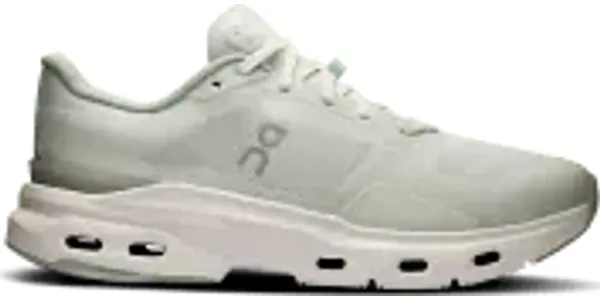
The details that matter
Underfoot: Focusboard, CloudTec and Missiongrip rubber
On lists three technologies in the sole.
• An updated CloudTec midsole: On says it is there for comfort and claims more comfort underfoot than before.
• A Focusboard in the sole: On says it adds stability during dynamic movement and controls twisting of the sole.
• A Missiongrip rubber outsole: designed for traction on multiple surfaces.
In use, ShoesTrace describes a flat, responsive sole suited to lifting and dynamic moves. Modern Shoe Guide places it in the middle: stable enough for training with lots of movement, but not the rigid base of a lifting-only shoe.
On grip, ShoesTrace calls it unwavering on gym floors. Modern Shoe Guide adds that the floor still matters: dust, moisture and worn rubber can change grip, and the shoe is not certified slip-resistant.
Upper and lockdown
In a gym shoe, the upper's main job is to keep your foot in place during quick changes of movement. ShoesTrace says this one gives a secure, comfortable fit for long wear, in hard workouts and daily activities alike.
In use: gym floor, treadmill and beyond
In the gym: reviewers agree this is the shoe's main job. Running on Cloud9 calls strength circuits a strong use case, and ShoesTrace highlights its side-to-side stability and firm grip on gym floors.
On the treadmill: it handles warm-ups and short cardio, but Modern Shoe Guide and Running on Cloud9 advise regular road runners to use a dedicated running shoe.
Outside the gym: reviewers disagree here. ShoesTrace says it is light enough to wear on to casual outings. Modern Shoe Guide says to skip it if nearly all your activity is casual walking. Both views fit together: it is fine for errands after the gym, but it is not the right buy if walking is the main use, and an outsole that sees a lot of pavement may wear differently than it does indoors.
How to read this shoe's specs
The sources do not give drop (the height difference between heel and forefoot), stack height or weight figures, so go by how the shoe feels when you try it on.
ShoesTrace describes a flat sole. That describes the sole's shape; it is not a drop number. When trying it on, stand on one leg and bend your knee to check that the base feels steady. ShoesTrace also calls the shoe lightweight, so pick it up alongside other training shoes in the store and compare.
Check how stable the base feels
Reviewers describe a flat sole that is stable enough for training with lots of movement. Stand on one leg, bend your knee and step sideways. If it feels wobbly or your foot slides, compare another size or model.
Leave room for your toes
Start with the size guidance on the product page, then lunge or squat as if under load. If your toes hit the front, try a larger size.
Compare the weight by hand
ShoesTrace calls this shoe lightweight. If weight matters to you, pick it up alongside other training shoes in the store and compare.
What to check when trying it on, and what to compare
When trying it on, do the moves you actually do in the gym. Lunge to check your toes still have room. Step sideways to check your foot doesn't slide. If you plan to warm up on the treadmill, try a short, easy jog too.
If it does not suit you:
• You run more than you train in the gym: Modern Shoe Guide and Running on Cloud9 point to the On Cloud X 4 for training-to-running crossover and more running mileage. For regular road running, look at a dedicated running shoe.
• You focus on maximal lifting: look at a dedicated lifting shoe with a more rigid base.
• Trail running, hiking or weather protection: look at trail or hiking footwear.
• Work that requires slip-resistant or safety footwear: choose a certified model.
Size and fit
The Cloudpulse 2 covered here is the men's standard-width version (style code 3MG1015).
Modern Shoe Guide recommends starting with the size guidance on the product page of the store you buy from, and leaving enough toe room for lunges and loaded movements. Check the exchange policy before buying.
3MG10154672 · 2026-11-24 · Recorded sizes, not current stock