
What stands out
- Several sources find the thick sole protective on long, easy runs
- Stable in a straight line, thanks to a wide base
- Several testers find it comfortable for walking and standing too
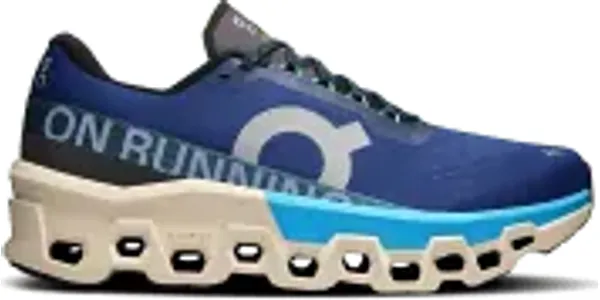
Catalog colors, not current stock.
Men’s road running shoe · for people who want a thick sole for long, easy runs and long hours of walking or standing
People who want a thick-soled shoe for long runs at an easy pace, or for long hours of walking and standing, and who prefer a firm-leaning ride to a sink-in soft one
A Shopee search for this model; pick the shop and colour you want.
Cloudmonster 2 is On’s thick-soled road running shoe, which On says has more cushioning and energy return than the first version. On’s US product page now labels it “Last season” and links to the new Cloudmonster 3. Several sources agree it is at its best on long runs at an easy pace. Solereview rates it good for long and easy runs but average for everything else. Tom’s Guide found it felt more at home at a slower recovery pace than when trying to run faster. WearTesters calls it a slam dunk for daily miles, walking and standing. On feel, most testers describe the ride as on the firm side. Solereview calls both midsole foams extremely firm. Thomas at Believe in the Run calls it a surprisingly firm ride for a max-stack shoe that still feels protective and resilient. WearTesters felt differently: neither squishy nor firm. Even so, it lists “firmer than current running shoe trends” as a con. The trade-offs are weight, sizing and value. RunRepeat calls it on the heavier side even for a maximalist shoe. On recommends going half a size down. Some found it as much as a size and a half big, while other testers found their usual size right. If you want a softer ride, try it on side by side with On’s Cloudeclipse or Cloudsurfer before buying.
Manufacturer information, lab findings, editorial reviews, community discussions · View sources

Experiences differ most on size — some found their usual size right, others found it clearly big — and on feel: several call it firm, while one Lemon8 user’s first impression was a soft, bouncy sole. For walking and standing at work, several agree it is comfortable.
Believe in the Run
Reviewer · Captured 2026-10-18Ryan at Believe in the Run wore a US M7.5, matching the size in the author profile, and says it is easily a US M9 from any other brand, with more than a thumb’s width in front of the toes — yet still got a decent lockdown thanks to On’s excellent lacing setup.
Read source ↗Doctors of Running
Reviewer · Captured 2026-10-18Matt at Doctors of Running found it true to size in a usual men’s US 10, but had to crank down the laces for a secure fit; after a few runs this caused some irritation on the top of the foot, and Matt also had to lace-lock the heel.
Read source ↗Tom’s Guide
Reviewer · Captured 2026-10-18Michael Sawh at Tom’s Guide, in a US 10 (UK 8) pair, found the ride stable and smooth, but the added weight made wanting to run faster a bit of a chore and the ride was firmer than Michael would like. With On’s Cloudeclipse and Cloudsurfer softer and just as protective at a similar price, Michael finds it hard to see why you’d choose the Cloudmonster 2.
Read source ↗Lemon8
Wearer experience · Captured 2026-10-18A Lemon8 user reviewing in Thai after about five months of use recalls a first impression of a CloudTec sole that feels clearly soft and bouncy; it isn’t very stuffy on hot days and works for walking around on non-running days, though they call the price fairly high.
Read source ↗Believe in the Run
Reviewer · Captured 2026-10-18A user’s rating entry on Believe in the Run (dated 24 September 2026, about 35 miles) says even the “amazing rocker design” couldn’t save how firm the shoes were; they felt clunky and blocky on the few runs, so they became work shoes, which felt way better suited.
Read source ↗www.on.com · 2026-11-24
Specifications from manufacturer information and the listed sources
People who want a thick-soled shoe for long runs at an easy pace, or for long hours of walking and standing, and who prefer a firm-leaning ride to a sink-in soft one
On the “runs big” side is On itself, which recommends going half a size down, and a full size down if the original Cloudmonster fit you perfectly. Solereview says that if you normally wear a US 10 you should get a US 9.5, otherwise your forefoot will be swimming inside a very loose upper, and unless you have ultra-wide feet you’ll struggle to get a secure lockdown. Running Warehouse suggests you might want to size down half a size. Its tester Jon called the pair “probably the biggest size 11 running shoe I have ever put on”, feeling at least half a size too big. At Believe in the Run the evidence is stronger still. On sent Robbe a US M7.5, Robbe’s normal size, but Thomas says that pair was about a size and a half too big for Robbe, so it went to Ryan, whose author profile lists a 7.5. Ryan says this US M7.5 is easily a US M9 from any other brand. Thomas found a US M10.5 ran a little long. Thomas has a narrow foot and says wider-footed runners might be fine, but that this one “goes to extremes”. RunRepeat’s owner poll of 224 votes also says it fits slightly large. On the other side, Matt and David at Doctors of Running found it true to size in their usual men’s US 10 and US 9.5. WearTesters says it fits true to size lengthwise, and Tom’s Guide also found it true to size. For room inside, separate width from height. RunRepeat measured the shoe’s interior at 98.5 mm wide against a 95.2 mm average, but the big-toe area measures 74.5 mm, close to the 73.2 mm average. The toe-box height of 25.3 mm is well below the 27.0 mm average, and RunRepeat says this leaves minimal room for toe movement. A low toe box can press on the tops of your toes even when the sides feel wide. The roomy upper meant several testers had to lace tightly. David at Doctors of Running says the upper has a lot of volume and width and had to be laced relatively tight to keep the foot from sliding. WearTesters says narrow-footed runners can cinch the laces without the shoe losing its shape, so it still looks good.
If you can, try on your usual size and a half size down on the same day, wearing your running socks, and stand up straight to check the space from your toes to the front of the shoe. Some found it as much as a size and a half big. Beyond length, wiggle your toes to check for pressure on top of them: RunRepeat measured a toe box lower than average, even though the sides are wide. Then lace up snugly, walk and jog, and check whether the laces press on the top of your foot and whether your heel slips up as you step. Matt at Doctors of Running and Jon at Running Warehouse both had to cinch the laces very tight, and Matt also had to lace-lock the heel (looping the top eyelets to help hold the heel). If adjusting the laces doesn’t remove a pressure point or stop your heel slipping, try another size or another shoe rather than hoping it goes away with wear. If the firm-leaning sole or the roomy upper doesn’t suit your feet, compare a softer max-cushion shoe or a closer-fitting one. If you order online, check the seller’s exchange policy first. On’s US page says limited editions and last-season items can be refunded but not exchanged. Thai sellers may have different terms.
On lists four main parts in the sole: CloudTec pods, dual-density Helion foam (two foam layers of different firmness), a nylon-blend Speedboard, and a foam insert in the forefoot to absorb impact. WearTesters reports that on its pair, the top layer of foam in the forefoot is firmer and more responsive, while the foam above the Clouds in the heel is soft and pliable. Solereview says only the foam insole and its plush lining give some step-in softness. CloudTec refers to the hollow pods that make up the lower layer of the sole. Solereview explains that the shoe’s softness comes from these hexagonal hollow chambers collapsing and rebounding, not from the foam, and that you notice it more when walking or running slowly than at higher speeds. As for Helion, RunRepeat says it is a blend of EVA and OBC — essentially an enhanced EVA that doesn’t reach the level of PEBA-based superfoams. WearTesters says the Speedboard sits closer to the layer of Clouds than to your foot, so it adds stiffness without hardness underfoot and keeps flex at the toes. Jon at Running Warehouse liked it most of anything in the shoe: it added a great level of stability and kept running form in line on tired legs. Sources disagree on its material and length. On calls it nylon-blend, RunRepeat says TPU, Doctors of Running calls it full-length, and WearTesters says three-quarter length. On the outsole, Solereview lists carbon rubber in high-wear areas. Tom’s Guide says On filled the gap in the middle of the sole to stop debris getting caught, and Matt at Doctors of Running has had no issue with rocks since the central gap was filled. WearTesters, however, lists as a con that nice-sized rocks can get caught in the outsole. If you often run on gravel, keep that in mind. For grip, RunRepeat recorded a friction score of 0.50, which it calls standard for a road running shoe, with sufficient traction on both dry and wet concrete.
On describes an engineered mesh upper, and the product page lists the material as polyester. Tom’s Guide says the mesh has some overlays for extra durability, and that On moved from 80% to 92% recycled polyester in the upper. Solereview notes the inside is fully sleeved. On breathability, the lab and the people who ran in it disagree. RunRepeat’s smoke test scored it 2 against a 3.6 average. The vent holes don’t truly ventilate, because an inner mesh layer still sits behind them. RunRepeat warns this could be a very, very important drawback for summer runs or for people with particularly warm feet, but adds that in cooler conditions it won’t be a significant issue and can even be an advantage for some. Several people who ran in it felt otherwise. Solereview calls the ventilation very decent for a double-layered upper. Jon at Running Warehouse found the upper very breathable. David at Doctors of Running says the mesh breathes well, and a Lemon8 user says it isn’t very stuffy on hot days. If your feet run hot or sweat easily, try it with the socks you actually run in. Views on the tongue differ. Matt at Doctors of Running describes it as gusseted (stitched to the shoe on both sides) but extremely thin, and RunRepeat calls it minimally padded. Ryan at Believe in the Run, though, found it padded enough to yank the laces tight, and Jon enjoyed the thinner tongue. At the heel, Ryan found it well padded and locking the foot in nicely. Tom’s Guide says the collar padding isn’t generous but is enough to keep things secure and comfortable. Jon had the heel collar rub the left ankle bone just a bit throughout testing, though it was not a major issue.
At easy paces, opinions line up fairly well. Solereview says it is best for unhurried runs: the stiff Speedboard makes transitions smooth, but the midsole isn’t particularly responsive. Tom’s Guide found the ride stable and smooth, with a mild rockered feeling (a curved sole that helps the foot roll forward). Ryan at Believe in the Run says the rocker hits just right under the toe to keep rolling forward. On long runs, Ryan was fine with the weight and the ride for the most part, but definitely felt running form break down in the later stages once past double-digit miles. At faster paces, results differ. Matt at Doctors of Running ran a fartlek (alternating fast and slow running) and a fast-finish long run in it. Matt says it isn’t the lightest shoe or a racer, but it still performed well. David at Doctors of Running found it could pick up the pace quite nicely for a training shoe. Jon at Running Warehouse mostly used it for easy runs, so doesn’t speak to faster workouts, but it delivered a nice little snap over a few miles at Jon’s own marathon pace. On the other side, Tom’s Guide says the noticeable jump in weight made wanting to run faster a bit of a chore. RunRepeat measured energy return of 56.5% at the heel and 60.3% at the forefoot, and finds the bounce falls short for uptempo runs. Beyond running, several sources mention walking and standing. WearTesters says it feels less bottom-heavy than the Cloudeclipse and moves more naturally for casual wear or walking, making it an ideal choice for jobs that require standing all day. Doctors of Running’s checklist answers yes to both walking and standing, and Tom’s Guide calls it a pretty comfortable walking shoe too. For stability, Solereview says it is very good as long as the route doesn’t involve sharp turns. RunRepeat measured the forefoot of the sole at 117.2 mm wide, up from 109.0 mm on the first version (115.1 mm average), and the heel of the sole at 86.3 mm (91.1 mm average). RunRepeat says this leans the shoe towards forefoot and midfoot strikers; heel strikers with a neutral gait can comfortably use it too, though the heel’s dimensions might not suit everyone. On durability, Matt had only a tiny bit of abrasion after 35 miles, at the spot where Matt’s shoes usually wear (rear outer heel). Tom’s Guide noticed part of the upper starting to come apart at the heel.
Drop is the difference in sole thickness between the heel and the forefoot. On lists 6 mm; RunRepeat measured 6.6 mm and calls the difference from On’s figure negligible. Drop describes the shape of the sole, not how soft or firm it feels. Weight only means something with a size attached. On lists 300 g. For a men’s US 9, Solereview lists 295 g, Believe in the Run 300 g, Doctors of Running 10.4 oz (about 295 g) and Running Warehouse 10.6 oz (about 300 g). Even at the same size, the figures differ slightly. Thomas at Believe in the Run writes that a US M8.5 weighs 10.6 oz (300 g) and that Thomas’s US M10.5 is over 11 oz, and Tom’s Guide’s US 10 (UK 8) pair weighed 10.2 oz. When comparing with other shoes, use figures for the same size. Stack height differs by source too. Solereview and Tom’s Guide list 35 mm under the heel and 29 mm under the forefoot, Running Warehouse 37 mm and 31 mm, and RunRepeat measured 37.9 mm and 31.3 mm. Whichever figure you use, this is a thick sole — but thick does not mean soft.
RunRepeat measured the shoe’s interior at 98.5 mm wide against a 95.2 mm average across 363 running shoes, but the big-toe area measures 74.5 mm, close to average, and the toe-box height of 25.3 mm is well below the 27.0 mm average. When you try it on, check both the sides and the tops of your toes, and lace up snugly before deciding.
On lists 300 g. For a men’s US 9, Solereview lists 295 g and Believe in the Run 300 g. RunRepeat weighed it at 292 g, above the 261 g average across 486 running shoes, and calls it on the heavier side even for a maximalist shoe. When comparing with other shoes, use figures for the same size.
RunRepeat measured 37.9 mm under the heel (35.6 mm average) and 31.3 mm under the forefoot (27.2 mm average) across 486 running shoes. It measured the drop at 6.6 mm, below the 8.4 mm average, and calls it a medium drop (On lists 6 mm). Stack tells you how much sole sits under your foot, not how soft it is: this shoe is thick, yet several sources find it firm, so walk and jog in it yourself before buying.
If you can, try on your usual size and a half size down on the same day, wearing your running socks, and stand up straight to check the space from your toes to the front of the shoe. Some found it as much as a size and a half big. Beyond length, wiggle your toes to check for pressure on top of them: RunRepeat measured a toe box lower than average, even though the sides are wide. Then lace up snugly, walk and jog, and check whether the laces press on the top of your foot and whether your heel slips up as you step. Matt at Doctors of Running and Jon at Running Warehouse both had to cinch the laces very tight, and Matt also had to lace-lock the heel (looping the top eyelets to help hold the heel). If adjusting the laces doesn’t remove a pressure point or stop your heel slipping, try another size or another shoe rather than hoping it goes away with wear. If the firm-leaning sole or the roomy upper doesn’t suit your feet, compare a softer max-cushion shoe or a closer-fitting one. If you order online, check the seller’s exchange policy first. On’s US page says limited editions and last-season items can be refunded but not exchanged. Thai sellers may have different terms.
On the “runs big” side is On itself, which recommends going half a size down, and a full size down if the original Cloudmonster fit you perfectly. Solereview says that if you normally wear a US 10 you should get a US 9.5, otherwise your forefoot will be swimming inside a very loose upper, and unless you have ultra-wide feet you’ll struggle to get a secure lockdown. Running Warehouse suggests you might want to size down half a size. Its tester Jon called the pair “probably the biggest size 11 running shoe I have ever put on”, feeling at least half a size too big. At Believe in the Run the evidence is stronger still. On sent Robbe a US M7.5, Robbe’s normal size, but Thomas says that pair was about a size and a half too big for Robbe, so it went to Ryan, whose author profile lists a 7.5. Ryan says this US M7.5 is easily a US M9 from any other brand. Thomas found a US M10.5 ran a little long. Thomas has a narrow foot and says wider-footed runners might be fine, but that this one “goes to extremes”. RunRepeat’s owner poll of 224 votes also says it fits slightly large. On the other side, Matt and David at Doctors of Running found it true to size in their usual men’s US 10 and US 9.5. WearTesters says it fits true to size lengthwise, and Tom’s Guide also found it true to size. For room inside, separate width from height. RunRepeat measured the shoe’s interior at 98.5 mm wide against a 95.2 mm average, but the big-toe area measures 74.5 mm, close to the 73.2 mm average. The toe-box height of 25.3 mm is well below the 27.0 mm average, and RunRepeat says this leaves minimal room for toe movement. A low toe box can press on the tops of your toes even when the sides feel wide. The roomy upper meant several testers had to lace tightly. David at Doctors of Running says the upper has a lot of volume and width and had to be laced relatively tight to keep the foot from sliding. WearTesters says narrow-footed runners can cinch the laces without the shoe losing its shape, so it still looks good.
3ME10122903 · 2026-11-24 · Recorded sizes, not current stock
If the firm-leaning sole or the roomy upper doesn’t suit your feet, compare a softer max-cushion shoe or a closer-fitting one, trying them on side by side on the same day. Tom’s Guide names On’s Cloudeclipse and Cloudsurfer as softer and just as protective at a similar price. Browse the catalog for more options.
Explore more reviewsThis review draws on On’s US product page for the men’s Cloudmonster 2; RunRepeat’s lab review (published 20 March 2024, updated 17 February 2026); wear-test reviews from six outlets — Doctors of Running, WearTesters, Believe in the Run, Running Warehouse (a shoe retailer), Tom’s Guide and Solereview (published February–September 2024); a Thai-language review post on Lemon8 (last edited 23 August 2025); and a user rating entry on Believe in the Run. All sources were accessed on 18 October 2026. Doctors of Running and WearTesters received pairs from On, Solereview bought its own at full price, and several sites earn money when readers buy through their links.
2026-11-24
2026-10-18
2026-10-18
2026-10-18
2026-10-18
2026-10-18
2026-10-18
2026-10-18
2026-10-18
2026-10-18
This review combines the sources listed on this page. Most findings are at model level and may not cover every colour or size.