The details that matter
What's under your foot
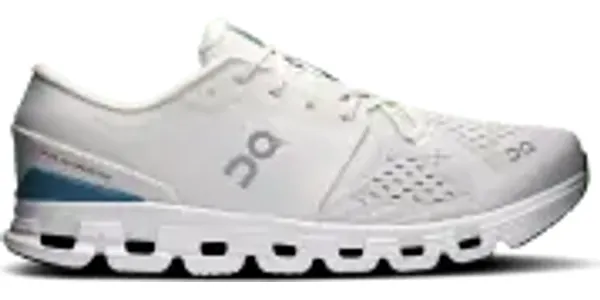
The sole is made of On's CloudTec pods, formed from Helion foam and arranged in segments under the foot instead of one full-length outsole. RunRepeat found the pods notably shallower on this model, giving a bit more grounded feel. RunDreamAchieve says On adjusted the midsole density for a more grounded feel than the previous version while keeping the energy return expected from the brand.
The foam's firmness is middle-of-the-road (RunRepeat measured 45.9 on an Asker C durometer), but it absorbs more impact than average (RunRepeat measured 109 SA at the heel and 73 SA at the forefoot). Energy return is also above average, at 58% in the heel and 59.4% in the forefoot, and RunRepeat says it springs back nicely on jumps. RunDreamAchieve calls the midsole responsive rather than squishy.
How cushioned it feels depends on the comparison. RunRepeat says it has more cushioning than a typical cross-trainer, while Running Shoes Guru rates it as having little cushioning and says the midsole is not built up like max-cushioned running shoes.
Inside the sole is an X-shaped Speedboard made from a pliable nylon blend. RunRepeat found it adds hardly any stiffness and lets the foot bend in any direction. Running Shoes Guru says it keeps the forefoot flexible for an explosive toe-off.
On markets the shoe as ultra-flexible, but RunRepeat's measurements do not bear that out. Bending it to 30 degrees took 14.8 N, more than an average training shoe, while torsional rigidity got the lowest score, 1 out of 5. In short, it is harder than average to bend up and down but twists side to side easily.
The rubber outsole is an average 3.7 mm thick. RunRepeat ground it with a Dremel and it wore 1.6 mm deep, so RunRepeat expects a shorter-than-average outsole lifespan.
The insole is removable and 5.0 mm thick at the heel. Running Shoes Guru describes it as a dual-density sockliner that adds comfort and support over hours of wear.
Upper: airy and light, but wears easily
The upper is mesh that On says is made from at least 90% recycled polyester. RunRepeat blew smoke into the shoe and it escaped within seconds, earning 5 out of 5 for breathability, better than the Cloud X 3. The Running Shoes Guru tester used it in many hot, humid sessions without their feet overheating. RunDreamAchieve says the material is soft against the skin, not abrasive.
The tongue is held by elastic gussets on both sides, and a midfoot cage connects to the laces, so lacing up pulls the midfoot snug. The ankle collar has more padding than the previous model. The sources disagree on the tongue: Running Shoes Guru says it is thicker, while RunRepeat measured 4.1 mm and says it is as minimally padded as before. If you like to lace tightly, try the shoe on laced the way you would actually wear it and check for pain on top of your foot.
The upper fabric wears through easily. In abrasion testing, RunRepeat rated toebox durability 2 out of 5, and the inner heel padding was destroyed in under 4 seconds, earning a durability score of 1 out of 5. RunRepeat therefore advises against abrasive exercises such as rope climbs. RunDreamAchieve, by contrast, says the upper holds up to frequent training.
The logos on the sides and heel are reflective and stand out in low light.
How it feels in use
In the gym, the shoe is at its best for jumping and cardio. RunRepeat says rope jumping, step aerobics and box jumps felt amazingly well cushioned. The Running Shoes Guru tester did body-weight exercises with running between sets and felt secure in every exercise, with no foot sliding.
Heavy lifting is not its strength. RunRepeat calls lateral stability a total disaster and the wobbliest trainer it has ever tested, especially for heavy weights and one-legged exercises, and worse than the Cloud X 3, so it recommends the shoe for light-to-moderate workouts only. That Fit Friend (as summarised by Buyary) also warns that the sole compresses under heavy lifting and the foot can spill sideways. RunDreamAchieve disagrees, saying the firmer midsole acts as a steady platform for squats, lunges and deadlifts.
For running, short distances work well, but it is not a long-distance shoe. The Running Shoes Guru tester took them on a few road and gravel runs, each under 5K, and they performed well. RunDreamAchieve says it performs best for runs under five miles (about 8 km), and that when you pick up the pace in fartleks or short intervals (short bursts of speed between easier running), the shoe responds with snappy energy return. The Running Shoes Guru tester has taken them on 10-mile (about 16 km) runs but does not recommend them for long distances because the midsole is not built up like max-cushioned shoes. A wearer commenting on the same page felt supported on longer runs, but found the forefoot a little too stiff and said that at times the shoe lacked the bounce they hoped for in sprints.
Grip is fine for moderate exercise on dry gym floors, but it is not the most reliable option if you need an extra strong bite; RunRepeat measured a fairly low friction score of 0.25. Buyary notes it can feel slippery on wet floors, while Running Shoes Guru had no slipping across various surfaces and weather.
It is comfortable for walking or standing all day; RunRepeat and RunDreamAchieve agree on this, though RunDreamAchieve says it is less plush than a recovery shoe.
Reading the numbers
Drop (the difference between sole thickness under the heel and under the forefoot): On lists 7 mm; RunRepeat measured 8.9 mm, a 1.9 mm difference. Drop only tells you how much thicker the sole is under the heel than under the forefoot; it does not decide whether a shoe is for running or the gym. When you try it on, squat and walk to see whether you feel tipped forward.
Stack height: RunRepeat measured 30.4 mm under the heel, about 5 mm above the average it compares against, and 21.5 mm under the forefoot, slightly above average. The Cloud X 3 had a 25.5 mm heel stack, so this version's heel is almost 5 mm thicker. RunRepeat says the heel stack adds walking comfort.
Weight: RunRepeat weighed a men's US 9 at 268 g, about an ounce under average. Compare it in your hand with your current pair when you try it on in a store.
Drop and stack height
On lists a 7 mm drop; RunRepeat measured 8.9 mm, with 30.4 mm under the heel and 21.5 mm under the forefoot, above the average it compares against. These numbers do not decide gym versus running use. Squat, stand on one leg and walk in them; if the heel feels too built up or the sole tippy, compare a lower training shoe.
Weight depends on size
RunRepeat weighed a men's US 9 at 268 g. When you try it on in a store, compare it in your hand with your current pair in the same size.
Low volume, no wide version
The inside width measures as standard, but internal volume is low and there is no wide version. Lace snugly, then check midfoot pressure and room for your toes to move. If the midfoot is tight, try half a size up and check that your heel still feels secure, and check the exchange policy before buying.
What to check, and what else to consider
When you try it on, lace it snugly first, then do a few light hops, stand on one leg and squat to see whether the sole tips sideways too much for the workouts you plan to do. Wiggle your toes to check for room, notice any pressure across the midfoot, and walk to see whether your heel slips.
If lifting is your focus, look at a training shoe with a more stable base. RunRepeat names the Nike Free Metcon 6, which is also comfortable and flexible but significantly more stable for lifting. For gym-only use, RunRepeat says the On Cloudpulse is more stable and sturdy, and Buyary reports that Erica Franzel says the Cloudpulse has a wider toebox.
If running is your focus, RunDreamAchieve says the Cloudmonster offers more impact protection for long road runs, the Cloudflow is more efficient for dedicated speed work, and the Cloudrunner has stability features the Cloud X 4 lacks.
Size and fit
Size: most reports say true to size, but the fit is narrow, so some people go up half a size. Running Shoes Guru and RunDreamAchieve say true to size, while RunRepeat says it runs slightly small. Buyary reports that Marissa Hill of ShadeTV found it true to size for her narrow feet, and that several Amazon buyers recommend going up half a size because the fit runs narrow for some feet.
Width and volume: the width measures as standard, but internal volume is low and there is no wide version. RunRepeat measured the inside width at the widest point (the ball of the foot) at 95.8 mm, a standard D width; toebox width at 73.0 mm; and toebox height at 26.6 mm, leaving the toes enough room. Still, RunRepeat does not recommend it for wide feet. RunDreamAchieve says particularly wide feet may feel a bit of midfoot pressure, which going up half a size often relieves, while narrow feet will likely find their usual size right, with the laces fine-tuning lockdown. Buyary reports that many Reddit users praise the fit for wider feet, so reports on wide feet go both ways.
Heel: opinions differ, so walk and hop lightly in them to check for heel slip. On promises excellent heel hold, but RunRepeat disagrees, rating the heel counter (the stiff structure around the heel) fairly forgiving at 3 out of 5 for stiffness. RunDreamAchieve says the heel does not slip on box jumps or direction changes and the redesigned collar grips the ankle better. Running Shoes Guru describes the heel fit as normal.
Foot type: if you overpronate or have flatter feet, this shoe is unlikely to suit you. RunRepeat warns people who overpronate (whose feet roll inward excessively on landing) that this shoe will exaggerate it. Running Shoes Guru does not think it is a good choice for flatter feet.
434444.545
3MF31134571 · 2026-11-24 · Recorded sizes, not current stock