The details that matter
Underfoot: cup sole, foam and a heel Air unit
The sole is a cup sole: rubber that rises around the foot as a rim and is stitched to the upper. RunRepeat says this structure supports the foot, which feels cradled inside the shoe. Inside is a foam midsole, with an Air capsule under the heel.
Nike says the heel Air unit provides lightweight impact cushioning. RunRepeat found a thin Air unit set inside dense foam, and AllAboutAnthony says the Air doesn't add much comfort, giving solid, basic support underfoot instead.
The foam itself is not hard: RunRepeat measured 45.5 AC, a moderately soft reading. Combined with the thin sole, the firm cup sole and an even firmer rubber outsole, though, the whole shoe feels firm. RunRepeat measured 43% energy return: the ride is flat and stable with no rebound.
The outsole pattern comes from hardwood basketball, with a pivot point and circular treads. RunRepeat measured the rubber at 89.5 HC, one of the hardest sneaker outsoles in its lab. It is 4.8 mm thick and wore only 0.8 mm deep in the abrasion test. RunRepeat says it handles concrete, asphalt and some casual outdoor basketball.
Upper: leather, a thick tongue and a firm heel hold
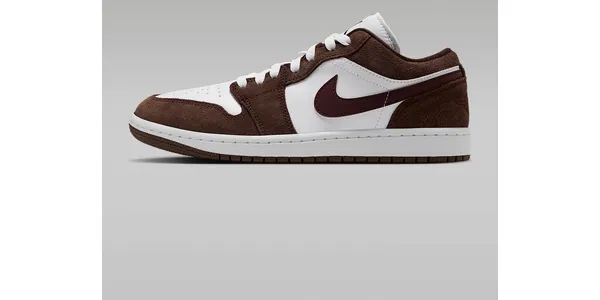
Nike lists a leather and synthetic upper, with toe perforations, a stitched Swoosh, the Wings logo on the heel and a Jumpman on the tongue.
Sources differ on the leather. AllAboutAnthony calls the materials surprisingly good for a plain shoe, but the leather varies by colour: on the Shadow, the black leather is softer than the grey; on the Gym Red, the red leather seems sturdier than the white areas. RunRepeat's butane-torch test confirmed real leather, but not high-quality leather: the midfoot panel and Swoosh melted easily, and the leather creases quickly.
The tongue is 15.9 mm thick, and RunRepeat says it removes lace pressure entirely. It has no gusset, but barely shifts. The heel counter (the stiff shell around the heel) is very stiff, scoring 5 out of 5, and holds the heel with no slipping. The lining around the heel collar is rough, though, and can rub the Achilles in the first few weeks. RunRepeat suggests taller socks or a plaster at first.
On airflow, RunRepeat's smoke and light tests gave it 2 out of 5 for breathability, and it suggests keeping the shoe for cooler weather. SoleFeed, meanwhile, sees the low collar as easier to wear in warm weather and good with summer outfits. The two views do not clash: the low collar helps on hot days, but the upper itself breathes poorly. In Thai heat, factor that in if you plan to wear it all day.
On foot: comfy enough for easy days, not a shoe for standing all day
Reviewers agree the sole is not soft, but differ on what it is good enough for. AllAboutAnthony finds it comfy enough for casual wear and likes its basic, simple comfort. SoleFeed says it is fine daily, but firm, not plush for long standing, and not a comfort sneaker. RunRepeat does not recommend it for all-day wear.
The women's review page on Nike shows both sides too: a wearer who normally takes size 7.5 rated it “Very comfortable”, while a size 9 wearer rated it “Average”.
Expect a break-in period. RunRepeat says it takes some time to feel fully broken in, and measured 16.2 N to bend it 30 degrees, about 15% more than its average sneaker. SoleFeed says some pairs feel stiff through the forefoot until broken in, while AllAboutAnthony found the soft leather around the toecap helps with break-in.
The upside of a firm, low sole is stability. RunRepeat describes very solid footing, and the sole resists twisting, scoring 4 out of 5.
Reading the numbers: a thin sole with an 11.1 mm heel-to-toe drop
The figures here come from RunRepeat's measurements.
Stack: the heel stack is 22.9 mm, which RunRepeat calls significantly lower than average, and the forefoot is just 11.8 mm. A sole this thin keeps the foot close to the ground and stable, but absorbs little impact. RunRepeat measured 70 SA of heel shock absorption: basic protection.
Drop (the difference between heel and forefoot sole thickness): 11.1 mm, measured on a half-cut shoe. It tells you how much higher the heel sits than the forefoot, not how soft the shoe is or which activity it suits.
Weight: 411 g in a men's US 9, about half an ounce heavier than average. RunRepeat says it is not a lightweight sneaker but doesn't feel particularly heavy. It is slightly lighter than the Dunk Low (420 g) and clearly lighter than the Air Force 1 ’07 (465 g). The women's version in your size will weigh differently, so lift it against other pairs when you try it on in store.
Firmness: the foam reads 45.5 AC (moderately soft), but the outsole is a very hard 89.5 HC, and the shoe takes about 15% more force to bend than average. The insole is 4.1 mm, slightly thinner than average, and removable, so you can use your own insole.
Stack and drop: check firmness by walking
RunRepeat measured a 22.9 mm heel stack, significantly below average, and 11.8 mm under the forefoot, for an 11.1 mm drop. A thin sole feels stable but absorbs little impact; drop only tells you how much higher the heel sits than the forefoot. When trying it on, walk on a hard floor for a while. If it feels too firm from the start, keep this pair for days with less walking.
Weight: not light, but doesn't feel heavy
RunRepeat weighed 411 g, about half an ounce above average, though it doesn't feel particularly heavy. It is slightly lighter than the Dunk Low and clearly lighter than the Air Force 1 ’07. Lift it against other pairs when you try it on in store.
Stiffness and flex: try bending the toe
The foam reads 45.5 AC, moderately soft, but the outsole is a very hard 89.5 HC, and the shoe takes about 15% more force to bend than average. Bend the toe by hand, then take a few steps rolling onto your toes. If the forefoot feels very stiff, allow time to break the pair in.
What to check when trying it on, and what to look at if it doesn't suit
When trying it on, check three things. Toes: the toe box tapers, so wiggle your toes and feel for side pressure on the big and little toes. Heel: wear the socks you will actually use and walk for a while to see whether the inner heel collar rubs your Achilles. Sole: walk on a hard floor in the store; if it feels too firm after a few minutes, it may not suit days with a lot of walking.
Check the real colours too. Buyers on Nike's review page say the white sole looked cream compared with the photos, the pink looked much more purple than shown, and one pair arrived without the “23” on the tongue seen in the picture. If ordering online, check the return policy first.
If it doesn't suit: if the toe box feels tight, the Nike Dunk Low has a broader, taller toe box, but no heel Air unit. SoleFeed finds the Dunk Low simpler and easier to wear, while the Jordan 1 Low carries more Jordan identity. For an easier everyday comfort baseline and if weight doesn't matter, SoleFeed points to the Air Force 1. For a lower-profile, slimmer retro shape, look at the adidas Samba. And if you walk all day, SoleFeed says a New Balance or ASICS runner is kinder to your feet.
Size and fit
Most sources say it runs true to size. RunRepeat and AllAboutAnthony (Shadow colourway) went with their usual size. SoleFeed says it is mostly true to size and suggests starting with your usual size; if you already wear Jordan 1s or Dunk Lows, the fit will feel familiar. On Nike's women's review page, the fit slider sits midway between “Runs small” and “Runs big”. A wearer who normally takes 7.5 says true to size, and a size 9 wearer who bought the milk-white colour says it fits perfectly.
Width: RunRepeat classes its pair as standard (D) width. Its gel mould of the interior measured 94.9 mm at the widest part, above average and good for a medium-width foot. The toe box tapers noticeably, though: the width near the big toe is a standard 68.5 mm. Toe-box height is an above-average 29.8 mm, so there is no pressure on the toes from above.
For wide feet, RunRepeat does not recommend this shoe, while SoleFeed says wide feet may prefer a half size up, especially in leather pairs that do not feel forgiving out of the box. AllAboutAnthony feels the Jordan 1 Low is slightly more accommodating than the narrow-fitting high-top, but in the Gym Red review found the toe box a little boxier than he would have liked. RunRepeat found the heel hold firm with no slipping.
Don't confuse it with the Low OG or ’85-cut versions, which differ from this one. SoleFeed says the ’85 cut can pinch the forefoot and has drawn size complaints.
55.566.577.588.599.510
DC0774-206 · 2026-11-24 · Recorded sizes, not current stock