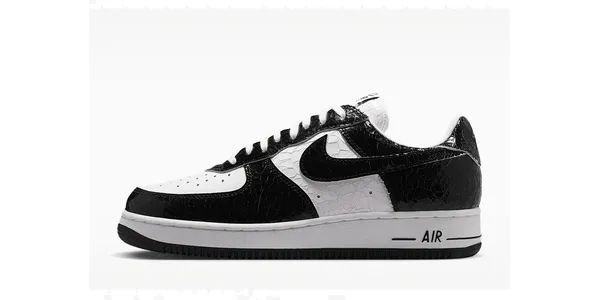
The details that matter
Underfoot: a rubber cupsole around foam and Nike Air
The Air Force 1 uses a cupsole: a rubber sole moulded like a tray that wraps up the sides. Inside it sit a foam midsole and a Nike Air unit. Nike says the Air unit provides lightweight impact cushioning. The unit runs from the heel to the ball of the foot; RunRepeat estimates about 3/4 of the shoe's length, while The Sole Supplier and SoleFeed call it full length.
The heel handles impact best. RunRepeat measured heel impact absorption at 99 SA (its shock-absorption score; higher means more impact absorbed) against an 88 SA average across the 80 sneakers it compared. Decaf Journal also found the heel cushioning excellent, with the forefoot comfortable enough but not feeling quite as robust as the heel.
The foam around the Air unit is softer than an average sneaker midsole, but the rubber shell around it is firm and gives very little, so the shoe as a whole feels firm. RunRepeat found it takes 60% more force to bend the sole than an average sneaker, and gave torsional rigidity its top 5/5 score. The upside is stability; the downside is a sole that does not flex much with the foot. RunRepeat believes this stiffness likely contributed to early foot fatigue in its wear test.
RunRepeat measured 54% energy return at the heel, above average, yet SoleFeed and Sneakerlens describe the ride as firm and without the bounce of modern foam shoes. RunRepeat's figure compares it with average sneakers; the other two compare it with modern foams.
The rubber outsole has circular pivot points under the ball of the foot and under the heel, originally designed to help basketball players change direction. The rubber is slightly harder than average, 4.6 mm thick, and wore 1.2 mm in the abrasion test, close to typical sneakers.
The insole is foam, 5.0 mm thick at the heel. It is removable but glued in, so peel it out carefully if you want to swap it.
Upper: all leather, padded around the ankle
The upper is all leather: the outside is only leather and rubber, with no mesh. The toe box has small perforations to let air through. The collar around the ankle and the heel are generously padded. The tongue is 8.0 mm thick, which RunRepeat found just right over the instep. It is not gusseted, but it barely shifted in wear. The Sole Supplier says the upper is forgiving enough that blisters are not a worry.
Genuine or synthetic leather: Nike Thailand's page for style JA0248 says genuine leather, while its Air Force 1 '07 page says synthetic leather. RunRepeat's flame test found real leather, with the Swoosh covered in a thick synthetic finish. If this matters to you, check the material on the product page of the colourway you plan to buy.
For breathability, RunRepeat scored it 3/5, slightly better than similar Nike models, but does not recommend it for summer. Decaf Journal says the perforations help but it breathes less than mesh. Two customers on Nike's Philippines site say they wore theirs on a rainy day and the shoes had no problems.
The toe area is tough: RunRepeat gave it a top 5/5 for toe-box durability and 4/5, above average, for the heel lining. Creasing across the toe, however, is something several sources agree on. SoleFeed says the standard '07 uses stiff, low-grade leather that creases hard within weeks. RunRepeat notes the creases do not damage the shoe but do spoil the look.
There is no heel pull tab. RunRepeat needed both hands and a bit of fiddling with the laces to get the shoe on and off.
Day to day: comfortable for city wear, heavy over long days
On everyday comfort, opinions differ. Decaf Journal says it is comfortable enough to wear every day without being a burden, The Sole Supplier says it handles hours of city wear without issues, and Sneakerlens sums up that owners praise its easy all-day comfort.
The critics point to weight and stiffness. RunRepeat wanted to take it off after a few hours of wear testing and considers it too heavy for comfortable all-day wear. Sneakerlens says you feel the weight on long walking days, and SoleFeed reports several buyers now reach for softer shoes for all-day wear. The difference depends on how long you wear it and what you compare it with. If you stand or walk all day on a regular basis, Decaf Journal says there are better options, and Sneakerlens recommends a shoe built for that job.
In the first days, RunRepeat describes a very long break-in, and SoleFeed says to expect a break-in before the leather softens. Decaf Journal and Sneakerlens found it comfortable after a short break-in, and some customers on Nike's sites say it fit perfectly from the first wear.
For grip, RunRepeat measured a heel coefficient of friction of 0.43, enough for most city surfaces. Sneakerlens says traction is strong on dry pavement and average in the wet, and RunRepeat warns it can slip on wet tiles. If you often walk on wet tiled floors, take extra care.
On long-term durability, Decaf Journal calls it very durable and easy to clean. Sneakerlens sums up that the leather wipes clean and the build survives years of rotation. SoleFeed, however, reports long-time owners finding newer '07 pairs wearing out in about a year where older pairs lasted several, and treats a standard pair as roughly a one-to-two-year shoe. SoleFeed also reports some owners finding the leather warps faster when soaked or machine washed, so wiping it clean is the better choice.
This shoe is not for running (Decaf Journal, The Sole Supplier) or hiking trails (Decaf Journal), and gives little for training with side-to-side movement (Sneakerlens). Decaf Journal says you can play basketball in it, but the all-leather build makes you less agile than a modern basketball shoe.
Reading the numbers: stack, drop and weight
Nike does not list stack or drop figures. The numbers below are RunRepeat's measurements.
Stack: 31.7 mm under the heel, which RunRepeat calls typical for lifestyle sneakers, and 17.2 mm under the forefoot, slightly thinner than average. That matches Decaf Journal's sense that the heel absorbs impact better than the forefoot.
Drop (the difference between heel and forefoot sole thickness): 14.5 mm, so the sole is clearly thicker under the heel than under the forefoot. RunRepeat says it feels more balanced on foot than the number suggests because the Air unit compresses under load. If you are used to shoes with similar heel and forefoot thickness, walk around the shop for a while to see whether you like it.
Weight: 465 g per shoe in a men's US 9. RunRepeat says it is heavier than every Dunk, Air Jordan and Air Max model it tested, high-tops included. Other sizes will weigh differently, so pick it up next to your usual shoes when you try it on.
Width: RunRepeat measured 91.3 mm inside at the widest point, a standard D medium width; 70.4 mm near the big toe, above average; and a regular 26.5 mm toe-box height. The sole platform measured 104 mm across the forefoot, a few millimetres narrower than average. That last figure is the width of the sole platform, not the room for your foot.
What a 14.5 mm drop means
Drop is the difference between sole thickness under the heel and under the forefoot. RunRepeat measured 14.5 mm (31.7 mm under the heel, 17.2 mm under the forefoot), so the sole is clearly thicker under the heel. When trying it on, walk for a while to see if you like the feel, especially if you are used to shoes with similar heel and forefoot thickness.
How heavy is 465 g?
RunRepeat weighed 465 g per shoe in a men's US 9, heavier than every Dunk, Air Jordan and Air Max model it tested. Other sizes will differ. In the shop, compare it with your usual shoes and walk a lap to see whether the weight bothers you.
How roomy is the toe box?
RunRepeat measured 91.3 mm of internal width, a standard D width, 70.4 mm near the big toe, above average, and a regular 26.5 mm toe-box height. When trying it on, wiggle your toes to check for room and notice any pressure on the sides.
What to check when trying it on, and what to compare
When trying it on, try your usual size and half a size down. Lace up snugly and walk for a while. Check whether your heel slips up out of the shoe as you step, wiggle your toes to see if there is enough room, and notice any pressure on the sides of the forefoot. Walk enough to judge whether the sole is too stiff for you, and compare its weight with your usual shoes. If you buy online, check the exchange policy first.
If it does not suit you: for a similar shape that is slimmer and lighter, SoleFeed and Sneakerlens point to the Nike Dunk Low, which fits more snugly. For a similar leather court shoe, SoleFeed considers the New Balance 550's leather better. If you need all-day comfort and a softer sole, several buyers SoleFeed mentions now reach for the Nike Vomero 5 or New Balance shoes. For running, look at a dedicated running shoe.
Size and fit
Length: several sources say it runs large. The Sole Supplier and SoleFeed recommend half a size down, Sneakerlens cites Nike itself recommending the same and reports some buyers going down a full size. Decaf Journal's tester, a US 10 in most sneakers, found a 9.5 fit perfectly and places it between true to size and half a size down. A customer on Nike's Philippines site who normally wears a men's 8 says it definitely runs big.
Others find it true to size. RunRepeat found no surprises on foot or in its measurements, a customer on Nike's Vietnam site who usually wears size 39 says it fit perfectly the first time, and Sneakerlens says a third-party buyer poll leans true to size. Feet genuinely vary, so if you can try a pair in a shop, The Sole Supplier recommends doing so.
Heel: RunRepeat found the heel counter (the stiff structure around the heel) very stiff, with no heel slippage. Decaf Journal (US 9.5), however, found the heel rose slightly out of the shoe with each step while walking, even though the overall fit was snug. Sneakerlens says true-to-size buyers often get heel slip and extra room, but once the length is right the padded collar helps lock the heel. If your heel slips out of the shoe as you walk in it, try half a size down.
Width: RunRepeat measured a standard medium width with a fairly rounded toe box. SoleFeed calls it friendly to medium and wider feet; Sneakerlens says average and mildly wide feet usually fit, while very wide feet may press against the leather. Some recent buyers feel newer pairs run slightly narrower than older ones. Nike Thailand's Air Force 1 '07 page lists men's US 6–13 in half sizes with no width options.
The Sole Supplier says all Air Force 1 versions, high, mid and low, are built on the same last. If another Air Force 1 fits you well, the same size should likely work.
7.588.599.51010.51111.512
JA0248-300 · 2026-11-24 · Recorded sizes, not current stock