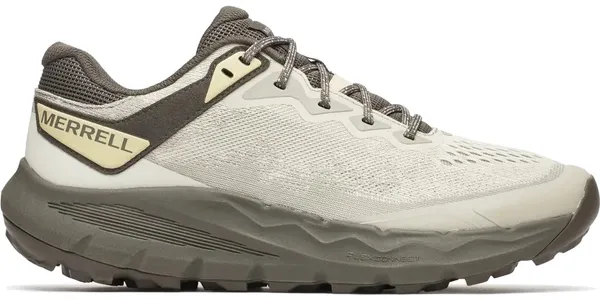
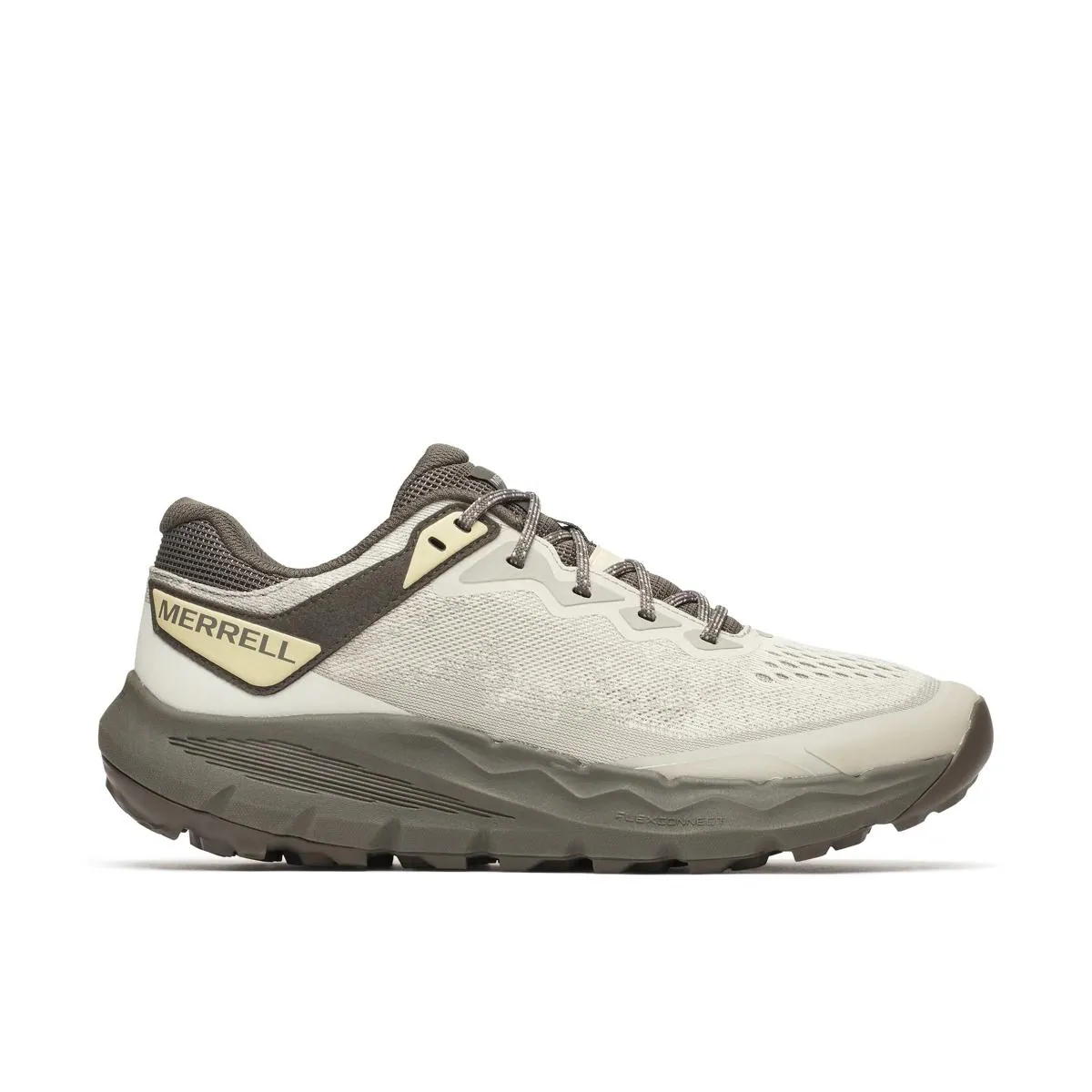
The details that matter
Underfoot: foam, flex grooves and rubber
The full midsole is Merrell's FloatPro foam. Believe in the Run calls it medium-firm, giving the shoe a nice structure and protection underfoot. RunRepeat found it a bit firm, while OutdoorGearLab calls it plush on moderate terrain. RunRepeat measured very low energy return (41.9% at the heel, 44.7% at the forefoot), lower than the Nova 3, and says the foam feels flat and slow on runs. Alastair Running, however, felt the foam struck a good balance between cushioning and responsiveness on longer runs.
The midsole has FLEXconnect grooves that Merrell designed to flex in two directions for better ground connection. Believe in the Run says the cross-hatched grooves at the ball of the foot make the forefoot more flexible without reducing the foam's protection. RunRepeat measured 11.4N of force to bend it, down from 15.0N in the Nova 3, and says the heel bevel is much larger, clearly aimed at helping heel strikers.
The Nova 4 no longer has the rock plate of earlier versions. RunRepeat says this saves weight but reduces protection against sharper impacts. OutdoorGearLab never felt impacts coming through the sole, even on rocky terrain. Alastair Running says the missing plate usually isn't noticeable, but it may be a consideration for very rocky trails.
The outsole moves from Vibram to Merrell's own Quantum Grip rubber, with lugs on a web-like rubber layer. The rubber doesn't cover the whole sole, which keeps weight down and the shoe flexible. Run to the Finish explains that hoof-shaped lugs in the centre give maximum grip where most of the weight lands during runs, while narrower rectangular lugs around the edge add more traction, giving wall-to-wall grip.
On grip, OutdoorGearLab says the shoe excelled most on dry ground, did well on rocks and mountain terrain, but was only okay through minor wet spots. Believe in the Run instead found it grippy in all conditions. RunRepeat measured traction at 0.41, up from the Nova 3; it sits below the lab average, but RunRepeat says anything above 0.40 performs well on a wide mix of trails. On durability, OutdoorGearLab found the rubber hard enough to last, while RunRepeat saw 1.1 mm worn away in its Dremel abrasion test and says it could be a bit more durable.
The insole is a removable 6 mm EVA foam footbed treated with Cleansport NXT, which Merrell says helps control odour.
Upper: breathable, but loose for some
The upper is a breathable knit mesh with TPU (thin plastic that adds structure) and a recycled mesh lining. A toe cap at the front helps, OutdoorGearLab says, with accidental toe bumps and catches.
Most reviewers praise breathability. Run to the Finish ran in it from cold weather in Colorado to warm weather in Arizona and says it kept the feet well ventilated, and after getting soaked in snow and puddles the upper dried quickly. Alastair Running praised it too after running in humid Florida. RunRepeat measured breathability at 59 BR (RunRepeat's own scoring unit) and says it's far from poor but falls short of what it would like to see from a modern trail shoe. RunRepeat ran a three-hour simulated sweating-foot test: the shoe turned 51% of the moisture into vapour, which RunRepeat calls quite effective.
The tongue is attached to the upper on both sides, which Merrell says keeps debris out. RunRepeat measured the tongue padding at 10.6 mm, extremely plush with excellent instep protection. The collar is padded. The flat, low-stretch laces run through punched eyelets instead of fabric loops. OutdoorGearLab and Run to the Finish say they stayed tied on runs, and there's an elastic lace keeper on the tongue.
On lockdown, reviewers disagree. Run to the Finish found the upper snug without being restrictive. Sam Edgin at Believe in the Run found it stretched during runs and creased at the eyelets when he tightened the laces. Alastair Running would like a little extra midfoot structure for aggressive descents, but says that for light trails and most runners, the shoe is awesome.
On odour, Merrell says Cleansport NXT helps control it. Run to the Finish ran in the shoe for about two months, wet and zipped inside a running bag, and it never developed a bad smell. There are no reflective details and no heel pull tab.
How it feels on the run
This shoe fits relaxed long runs best. OutdoorGearLab puts the sweet spot between 10 and 50 miles (about 16–80 km) and says the high stack reduces fatigue over long distances. Run to the Finish took it on a 20-mile (about 32 km) run and through a trail 50K training block, and the shoe never caused hotspots. Alastair Running ran it on gravel, packed dirt, grass and road and found it stable and predictable.
When you want to pick up the pace, experiences differ. Run to the Finish says the shoe still responded well during short pick-ups within a long run but wouldn't be the first choice for a speed-only workout. OutdoorGearLab found it a bit sluggish and slow on fast flats. Believe in the Run instead felt the drop and flexible forefoot gave a fun sense of forward momentum on easy, flat ground.
On firmness, RunRepeat found it a bit firm and says that's mainly a matter of taste, but it won't satisfy anyone who prefers a plush feel. Believe in the Run says the ride isn't especially soft and likens it to the Saucony Peregrine. OutdoorGearLab, on the other hand, found it plush on moderate terrain and never felt it sinking too much into the midsole.
Steep and technical ground is where to be careful. OutdoorGearLab says the high stack and drop cause instability on technical terrain and put more torque on the ankles than other shoes on off-camber ground. Believe in the Run says 8 mm combined with the loose fit felt a little too severe for really technical, steep descents, and downhills felt like leaning over the toes without much stability to catch himself. Alastair Running says the 8 mm drop and flexible forefoot can feel less stable on steep technical downhills. Run to the Finish sees it differently, calling it supportive on rocky, uneven surfaces and technical trails.
On drop, RunRepeat says it suits heel strikers but feels awkward for midfoot and forefoot strikers. The Run to the Finish writer, used to 4 mm drop shoes, noticed no Achilles discomfort at all.
How to read the numbers
Merrell lists a 29 mm heel stack, 21 mm forefoot stack and 8 mm drop (drop is the difference between heel and forefoot sole thickness). RunRepeat notes that 8 mm is already on the high side for a trail shoe.
Two labs measured a thicker shoe than listed. RunRepeat measured 37.7 mm at the heel, 25.6 mm at the forefoot and a 12.1 mm drop, and says it doesn't feel anywhere near 8 mm on runs. OutdoorGearLab measured 37 mm at the heel, 26 mm at the forefoot and an 11 mm drop. Expect a thicker sole and a higher drop than Merrell's figures suggest. OutdoorGearLab says the high stack reduces fatigue on long distances but also reduces ground feel.
Weight needs a size attached. Merrell's product page lists 261 g without stating a size, while RunRepeat reports the brand figure as 234 g. Believe in the Run lists 275 g and Alastair Running lists 269 g, both for a US men's 9. RunRepeat weighed 272 g, lighter than the 305 g it weighed for the Nova 3. OutdoorGearLab weighed about 318 g per shoe in a US men's 10.5.
Merrell lists 4 mm lugs; OutdoorGearLab measured 3.7 mm. RunRepeat says this depth is a middle ground with solid grip on easy and moderate trails. RunRepeat also measured torsional rigidity at 12.2 Nm, meaning the shoe twists and flexes easily in every direction.
Drop and stack: Merrell's figures and lab numbers differ
Merrell lists 29 mm at the heel, 21 mm at the forefoot and an 8 mm drop, but RunRepeat measured a 12.1 mm drop and OutdoorGearLab 11 mm. At the heel, the two labs measured 37–37.7 mm, about 8–9 mm more than listed. RunRepeat says this drop suits heel strikers but feels awkward for midfoot and forefoot strikers. If you land midfoot or forefoot, jog a few steps in the shop to see whether it feels forced.
Weight: compare at the same size
Merrell lists 261 g, while a US men's 9 is around 269–275 g according to Believe in the Run and Alastair Running, and OutdoorGearLab weighed about 318 g per shoe in a US men's 10.5. Compare other shoes at the same size, or pick them up side by side in the shop.
Lockdown: check the heel on a downslope
Both Believe in the Run testers found the fit loose. When trying it on, lace it snugly and walk down a slope. If your foot slides forward, try heel-lock lacing first. Michael Loutzenheiser thought his loose fit may simply have been a sizing issue, and suggests that if you normally have to size down in some shoes, it may be worth trying a half size down.
What to check when trying it on, and what to compare
When trying it on, lace it snugly first, then walk down a ramp or stairs in the shop to see whether your foot slides forward or your heel lifts. If the heel still feels loose, try heel-lock lacing (using the top eyelet). Run to the Finish says the laces are long enough for it, and Alastair Running says the tongue suits this lacing and gives extra support on descents.
Check the midfoot too. If the standard version is tight through the midfoot, try on the wide version. Michael Loutzenheiser at Believe in the Run found the heel and midfoot loose and thought it may simply have been a sizing issue. He suggests that if you normally have to size down in some shoes, it may be worth trying a half size down.
If the Nova 4 doesn't suit you, think about what you want more of. For a livelier, bouncier ride, OutdoorGearLab suggests looking at something lighter. For frequent off-camber terrain, OutdoorGearLab suggests a shoe with less stack. For frequent mud and wet trails, look for deeper lugs and a full rubber outsole. For very rocky trails, look for a shoe with a rock plate.
Size and fit
The Nova 4 comes in men's sizing only, in standard and wide widths. Most say it fits true to size. RunRepeat's size poll of 17 votes comes out as true to size. Sam Edgin at Believe in the Run wears a size 10 and says it's true to size, and Alastair Running agrees.
There's room in the toes. Sam Edgin found plenty of toe room, and Alastair Running says his toes could splay naturally. The Run to the Finish writer has a standard-width foot and found it comfortably roomy without being excessive. Run to the Finish also notes, from other reviews, that narrow feet may find the toe box a bit roomier. RunRepeat measured the toe-box height at 31.0 mm, with plenty of space above the toes.
Heel experiences differ. RunRepeat scored heel-counter stiffness (the firm cup around the heel) 2 out of 5, with a natural feel and minimal restriction. OutdoorGearLab found heel lockdown adequate. Run to the Finish says the heel cup kept the foot securely in place, and the writer used heel-lock lacing to keep it locked in. Alastair Running says the padded collar and heel counter give good heel lock. Michael Loutzenheiser, in a size 9.5, found the heel and midfoot baggy; when the going got steep his feet slid around despite cinching the laces, and he thought it may simply have been a sizing issue.
60175M-J068709 · 2026-11-24 · Recorded sizes, not current stock