The details that matter
What sits under your foot and what each layer does
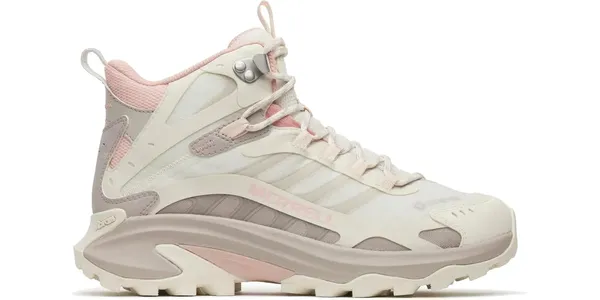
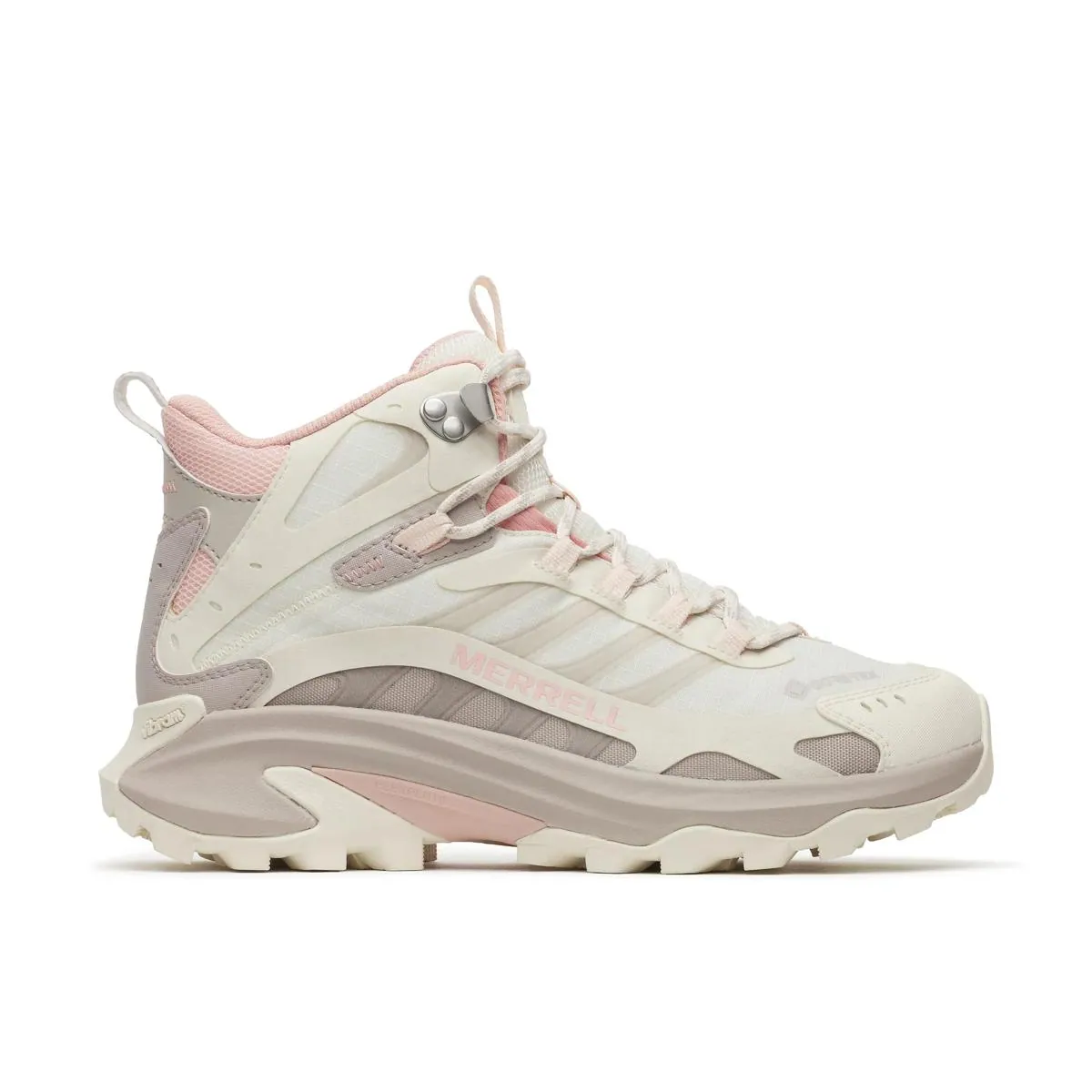
The insole is EVA foam that Merrell says is 50% recycled. RunRepeat measured it at 5.5 mm thick, and it is removable, so you can swap in your own orthotic.
The midsole is FloatPro foam, which Merrell first developed for its trail running shoes. RunRepeat measured it at 33.5 AC, one of the softest hiking boots it has tested. After 20 minutes in a freezer the foam became 21% firmer, an increase about average for hiking boots. Merrell says it has 30% more foam than the first version, but RunRepeat compared heel stacks and found them only about 7% thicker.
Between the foam and the rubber sits a FlexPlate made of fiberglass-reinforced polyamide. It resists twisting and adds midfoot stability while leaving the forefoot free to bend. Sources describe its length differently: RunRepeat says the plate sits in the midfoot and does not reach the toes, while BetterTrail describes it as full-length. Merrell's technology list names the FlexPlate and a full-length rock plate as separate items.
In RunRepeat's lab tests, the forefoot needed only 26.0 N to bend 30°, less than the average hiking boot, so it flexes more easily, while torsional rigidity is a solid 20.7 Nm.
The outsole is Vibram TC5+, a compound made exclusively for Merrell. The rubber is 2.3 mm thick excluding lugs. The brand states 4 mm lugs (RunRepeat measured 3.7 mm). The perimeter lugs are more aggressive than the central ones, and a heel brake helps on steep descents. RunRepeat sees this lug depth as suited to trails with occasional rocks, grass, moss and light mud.
Upper: waterproofing, lockdown and the parts that wear
The upper is ripstop nylon (a weave that stops tears from spreading), with a GORE-TEX waterproof membrane inside and a 100% recycled mesh lining. The tongue is gusseted all the way to the top, keeping out water, sand and grit. OutdoorGearLab measured a flood height of 5.37 in (about 136 mm), slightly above average.
Durability depends on where you look. In RunRepeat's Dremel test the toe box scored the full 5/5, but the collar mesh tore within seconds, so RunRepeat lowered its heel padding durability score to the minimum 1/5. Live for the Outdoors says the exposed mesh on the sides helps ventilation but is easily damaged, and the toecap is not stiffened. OutdoorGearLab notes the fabric eyelets may fray or wear through over time, though theirs had not yet.
Lockdown comes from standard laces and a metal hook at the ankle. BetterTrail never needed to retighten during the day, and RoadTrailRun felt no pressure from the hooks. RunRepeat scored the heel counter (the stiff structure around the heel) 4/5: stiff at the base and softer near the collar. Testers disagree on ankle padding: Advnture and RoadTrailRun found it well padded and secure, while Live for the Outdoors found it less plush than many rivals.
Merrell treats the upper with Cleansport NXT for odour control. Advnture's tester says the pair still smells fresh; RoadTrailRun's tester still notices some odour after 100 miles.
How it feels on the trail, and where testers disagree
Comfort is where testers agree most. BetterTrail wore it for four days in the Grand Canyon without a single blister or hotspot. RoadTrailRun wore it for eight days on the Tour du Mont Blanc with no blisters and no tired legs at the end of each day.
On heat, the lab and the trail differ. RunRepeat's artificial foot, warmed to 38°C, evaporated only 19% of sweat in three hours. Yet BetterTrail stayed comfortable in 21–29°C (70–85°F), warming up only on hard climbs, and RoadTrailRun's feet never got hot on an eight-day summer trek. If your feet sweat easily or you often wade through water, keep the slow drying in mind. In the cold, OutdoorGearLab's women's review found the thin mesh did little to keep feet warm, while Advnture wore it through winter and early spring and found it warm without feeling stuffy.
On grip, BetterTrail found it excellent on rock, including wet slickrock, but RoadTrailRun felt the outsole was less sticky on wet surfaces than the Vibram soles on its AKU and Topo Trailventure 2, so walked more carefully on slippery ground. OutdoorGearLab's women's review says the lugs grip well unless packed with mud.
On carrying a pack, testers disagree. BetterTrail felt secure with about 16 kg (35 lb) in the Grand Canyon. RunRepeat finds it very stable compared with boots in the same light weight class, still able to handle a 14 kg (30 lb) or heavier pack, though that is slightly outside its comfort zone. But RunRepeat also says the boot flexes easily, which makes it less than ideal for serious hiking or backpacking. Advnture sees it as a good option for backpacking and hut-to-hut trekking on trails that aren't too full-on, and Live for the Outdoors says it gives better ankle support than many rivals. On the critical side, OutdoorGearLab's women's review found the collar flexes a lot and the single hook felt ineffective, especially under a heavy pack. BetterTrail also warns that hikers who don't lace tightly may find ankle support lacking with a multi-day load.
On wear, BetterTrail saw the rubber start to wear after about 30 miles (about 48 km), and after 50 miles (about 80 km) the exposed midsole foam had significant abrasions and the side TPU details were peeling and looking worn, though so far only cosmetically. RoadTrailRun saw no outsole wear after 100 miles (about 160 km). Advnture says TC5+ isn't quite as durable as Vibram Megagrip and wears faster on repeated rocky scrambles.
How to read this boot's numbers
Merrell lists a 34 mm heel stack, a 24 mm forefoot stack and a 10 mm drop (the difference in sole thickness between heel and forefoot). Measured, the sole is thicker. RunRepeat cut the boot in half and measured 40.8 mm under the heel and 26.9 mm under the forefoot with a caliper, giving a 13.9 mm drop. OutdoorGearLab used a tape measure and found about 38 mm under the heel. The two sites measured differently, but both found more than Merrell's figures.
RunRepeat says a 13.9 mm drop matches the hiking boot average, so boot wearers will find it familiar. RoadTrailRun says 10 mm is a fairly high drop compared with Topo and HOKA at 5 mm. If you are used to low-drop shoes, try walking up and down a ramp in the store first.
On weight, Advnture gives 400 g per boot, 193 g lighter than the Moab 3 Mid GTX. Weight changes with size, so compare boots in the same size, or hold them side by side when trying them on in the store.
Drop and stack height
Drop is the difference in sole thickness between heel and forefoot. Merrell lists 10 mm, but RunRepeat measured 13.9 mm, which matches the hiking boot average. RoadTrailRun calls 10 mm a fairly high drop next to Topo and HOKA at 5 mm. If you are used to low-drop shoes, walk up and down a ramp before buying.
Compare weight in the same size
Advnture gives 400 g per boot, 193 g lighter than the Moab 3 Mid GTX. Bigger sizes weigh more, so compare figures in the same size, or hold the boots side by side when trying them on in the store.
Check forefoot width
RunRepeat measured the inside of the standard width at 91.4 mm at the widest forefoot point and considers it rather close-fitting. When trying it on, check for side pressure on the forefoot and whether your toes can move. If it feels tight, try the wide version Merrell makes for men and women.
What to check when trying it on, and what to look at if it doesn't suit
When trying it on, wear the hiking socks you will actually use, lace snugly and hook the ankle lace. Then check whether your toes can move, whether the sides press on your forefoot, whether your heel lifts walking up a ramp, and whether your toes hit the front walking down. Squeeze the collar too, to judge whether it is stiff enough for the pack weight you carry.
If you want a more durable boot, BetterTrail compares it with the Moab 3 Mid, whose pigskin leather and thick mesh upper lasts much longer and costs less, but is heavier and less breathable. Live for the Outdoors mentions the Inov-8 Roclite G345 GTX V2, which costs the same, is lighter and has a very durable, aggressive outsole, as well as more durable lightweight boots such as the Oboz Katabatic Mid and Scarpa Rush 2 Mid GTX, although they are more expensive. If you regularly go off-trail or carry heavy packs, look for a boot with a protective rand and a stiffer collar.
Size and fit
Sites disagree on sizing. RoadTrailRun and OutdoorGearLab's women's review say it runs true to size. BetterTrail's tester wore a women's 8 and found it perfect; their feet are between 8 and 8.5, with a thin heel and a wide midfoot and toes. OutdoorGearLab's men's review found it long, needing tighter lacing or thicker socks, and says some people may be able to size down half a size. RunRepeat rates it slightly small.
On width, RunRepeat took a gel mould of the standard (D) width and measured 91.4 mm at the widest forefoot point, which it considers rather close-fitting and too tight for 2E-wide feet or pronounced bunions. A toe-box height of 27.3 mm means it does not expect pressure on top of the toes. Live for the Outdoors found the forefoot and toes moderately spacious, Advnture calls the fit fairly neutral without Keen-style toe room, and OutdoorGearLab's women's review found it suitable for wide or narrow feet. Merrell makes wide versions for men and women; if the standard width feels tight at the forefoot or midfoot, try the wide version on before buying.
On the heel, Live for the Outdoors says it hugs the heel nicely. BetterTrail, whose tester has a thin heel, had no slipping or hotspots. RoadTrailRun found the hold not overly snug but secure on both climbs and descents.
58713W-J00003463 · 2026-11-24 · Recorded sizes, not current stock