The details that matter
What is underfoot and how it feels
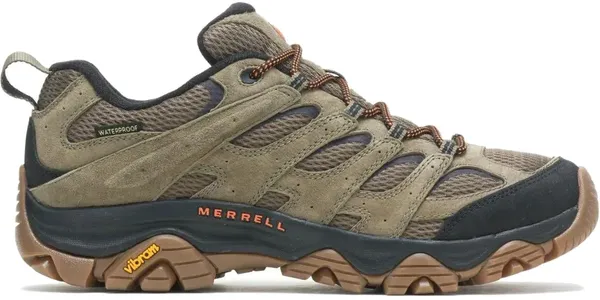
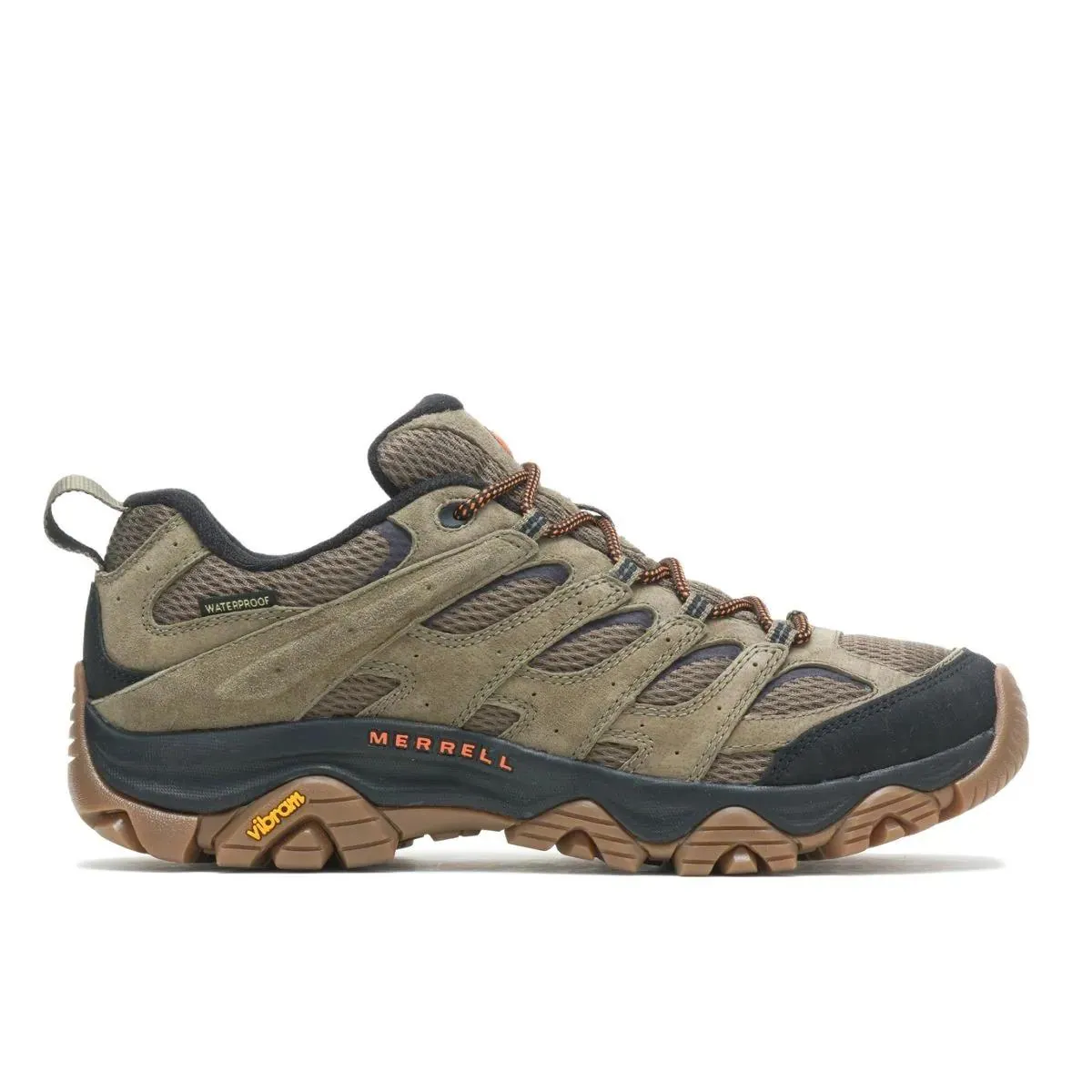
The midsole is Merrell's Super Rebound Compound foam, with a Merrell Air Cushion under the heel that Treeline Review (Mid version) found absorbs impact well enough for day hiking and backpacking. A molded nylon arch shank sits under the arch; OutdoorGearLab says it adds stability on uneven ground, and Mountaineer Journey says it gives great stability on the trail. Inside sits a footbed that Merrell shapes to contour to the foot.
BetterTrail describes the cushioning as relatively firm but substantial: not squishy like a Hoka, and not harsh or board-like, and it does a great job of shielding the foot from sharp rocks. Mountaineer Journey repeatedly climbed and descended the same steep rocky trail without midfoot soreness. OutdoorGearLab calls the Kinetic Fit insole one of the best-quality footbeds among the shoes it has reviewed and says the foam keeps you comfortable under heavy loads, but also found that the shoe made testers feel taller and a bit clunky.
The outsole is Vibram TC5+ rubber formulated for Merrell, with 5 mm lugs and octagonal heel lugs for extra braking. OutdoorGearLab says it sticks well on even trails and smooth rock slabs, but BetterTrail says it grips rock less well than Vibram Megagrip. If you scramble on rock often, a stickier rubber will give more confidence.
Upper: materials, warmth and lockdown
The upper combines pig suede leather with mesh panels. Behind them is a waterproof membrane that Merrell says seals water out while letting moisture escape. The lining is 100% recycled mesh. The bellows tongue is attached to the shoe all the way up; Mountaineer Journey says this gives maximum protection against water, dirt and anything else you meet on the trail.
A rubber toe cap at the front guards against rocks and roots, and a reinforced heel counter (the stiff structure that wraps the heel) sits at the back. OutdoorGearLab found the leather and mesh soft, supple and easy to break in, with no pressure points while walking. The lacing is easy to use and holds the foot securely; Mountaineer Journey had no foot movement inside the shoe on technical trails.
On warmth, Treeline Review, which wore the Mid version, says the waterproof versions run fairly warm because of the membrane. Mountaineer Journey praises the membrane for both water resistance and breathability, yet still lists breathability as a main limitation alongside weight. The Moab 3 also comes in a non-waterproof version, so if you mostly hike on hot days and rarely meet water, try on both before choosing.
How it feels on the trail
On ordinary trails, testers agree the shoe is stable. BetterTrail covered more than 10 miles (about 16 km) and carried a 25–30 lb (about 11–14 kg) overnight pack and says the ride helped stave off foot fatigue. Mountaineer Journey carried a 40 lb (about 18 kg) pack with no ankle instability.
For water, OutdoorGearLab submerged the shoe for 5 minutes and Mountaineer Journey for 10, and no water got in either time. OutdoorGearLab measured a flood height (the water depth the shoe takes before water spills in at the collar) of 3 inches (about 7.6 cm). Shallow stream crossings are fine, but deeper water comes in over the collar. Views on drying differ: Mountaineer Journey says the shoe dries quickly after submersion, while OutdoorGearLab says the pig suede soaks up water and dries slowly once fully soaked, and recommends treating it with an aftermarket product.
Grip depends on the surface. OutdoorGearLab found good traction on wet and dry trails, and Mountaineer Journey walked through wet mud without slipping. OutdoorGearLab, though, found the lugs clog with mud easily, which results in poor grip, and are not deep enough for loose surfaces. BetterTrail says the outsole can cake up in heavy mud and does not shed debris as easily as more open designs. Treeline Review, in the Mid version, says the sole can feel slippery on creek crossings, slick shale and off-trail ground.
On weight, OutdoorGearLab's testers found it heavy on long walks and reached for much lighter shoes on longer outings. BetterTrail says weight is arguably its biggest downside and a real consideration if you plan to cover serious mileage or want to break into a run on the trail. Among people who hike long distances in it, Mountaineer Journey has done 12+ mile (about 19 km) days without issue, and the creator of the YouTube video 'The Only Hiking Shoes I Use', who has worn the women's version for about two years, calls it the only hiking footwear they trust for long hikes.
On steep and technical ground, OutdoorGearLab felt the shoe rode a little high, which gave the testers pause on technical and steep terrain. Mountaineer Journey does not recommend the low-cut version beyond moderate terrain because they felt they couldn't hold an edge on a very steep incline.
How to read the numbers
Drop (the difference between sole thickness under the heel and under the forefoot) is 11.5 mm, as Merrell lists it. The spec table in Treeline Review's review of the Mid version gives 31.7 mm under the heel and 20.5 mm under the forefoot. That drop puts the heel clearly higher than the forefoot; if you are used to low-drop shoes, walk up and down a ramp in the store first. Views on stack also differ: OutdoorGearLab felt taller in the shoe, while Mountaineer Journey describes the stack as minimal to moderate with very good shock absorption.
Read weight with its size. Merrell lists 480 g for the men's version and 370 g for the women's, without a size. OutdoorGearLab weighed 1.02 kg per pair (about 510 g per shoe) at men's US 11, among the heavier shoes in its review. Each source's figure comes from a different size and method, so in the store, lift it next to the other hiking shoes you are considering.
What an 11.5 mm drop tells you
Drop is the difference between sole thickness under the heel and under the forefoot. Merrell lists 11.5 mm for the Moab 3 Waterproof, and the spec table in Treeline Review's review of the Mid version gives 31.7 mm under the heel and 20.5 mm under the forefoot, so the heel sits clearly higher. The number alone does not tell you what activity it suits; walk up and down a ramp in the store and see whether your calves and heels feel natural.
Read weight with its size
Merrell lists 480 g (men's) and 370 g (women's). OutdoorGearLab weighed 1.02 kg per pair at men's US 11, among the heavier shoes in its review. When comparing with other shoes, match the size and check whether a figure is per shoe or per pair.
5 mm lugs and the ground you hike on
Mountaineer Journey calls 5 mm lugs standard for most hiking shoes. BetterTrail says the tight lug spacing extends sole life on rocky ground, but the outsole can cake up in heavy mud. OutdoorGearLab says the lugs are not deep enough for loose surfaces. If your usual trails are heavy mud or loose dirt, compare with shoes that have deeper, more open lugs.
What to check when trying it on, and what to compare
Bring the socks you actually hike in, lace the shoe snugly before walking, and check three things. First, the toes: Mountaineer Journey found the toe box a little tight around the second and third toes at first, which eased after break-in. Second, the heel: walk down a ramp and check for lift or slipping, since Mountaineer Journey felt a little extra room at the heel compared with the toe box. Third, the midfoot: if the standard version feels tight through the midfoot or sides, try the wide version on before buying.
If it feels too heavy, BetterTrail notes that Merrell's more agile Moab Speed 2 is notably lighter, saving 5 oz or more, and that the Hoka Anacapa 2 Low trims a few ounces and feels nimbler thanks to its bouncier midsole. The Salomon X Ultra 5 GTX is lighter, nimbler and more supportive, but narrower. For more toe protection, the Keen Targhee IV has a full wraparound rubber toe cap. If you scramble on rock often, look for a shoe with stickier rubber such as Vibram Megagrip.
Size and fit
Three sources say it runs true to size. Treeline Review wore the Mid version in men's 11, its usual size. BetterTrail's women's 9 fit spot-on; that tester normally wears 8.5 and sometimes 9 in running shoes. Mountaineer Journey wore men's 10.5 without sizing up or down.
On width, views differ slightly. Treeline Review (Mid version) found it roomier inside than many boots it had worn, good for higher-volume feet, with a toe box that fits light to heavy socks. BetterTrail describes a moderately roomy toe box and average-volume midfoot that was an excellent match for the tester's slightly wide foot. OutdoorGearLab calls it a medium fit. Mountaineer Journey found it slightly wide overall but snug around the second and third toes.
At the heel, BetterTrail found a secure, locked-in hold, and Mountaineer Journey had no heel rubbing but noticed a little more room at the heel than at the toe box. Merrell sells medium and wide widths in both men's and women's versions.
52474M-J036553Z · 2026-11-24 · Recorded sizes, not current stock