The details that matter
Underfoot: firm foam, a flexible sole and stability shanks
The midsole is EVA foam, per Live For The Outdoors. RunRepeat measured it at 31.1 HA (a foam hardness score; higher is firmer), much firmer than the 28.7 HA average, but still found impact protection adequate and says the firm foam adds confidence on rugged trails. Live For The Outdoors says it lacks the plush bounce of some modern, ultralight hiking footwear but still feels adequately comfy.
The sole has stability shanks. RunRepeat found two: one embedded in the midsole and one adding support on the inner side of the foot. Live For The Outdoors says the shank comes with a plate that protects against sharp rocks. Even so, the sole bends easily: RunRepeat needed only 27.4 N to bend it 90 degrees, against a 44.7 N average. That adds comfort, but Paul Webster of Walkhighlands says the very bendy sole means you couldn't use the front points if you wear flexible crampons (metal spikes fitted under the boot for walking on ice); he says these boots are intended for three-season use.
On stability, RunRepeat found no rolling even with a heavy backpack, but OutdoorGearLab says the soft nubuck lets side-to-side stability suffer a bit, and the boot did less well in edging tests. TrekSumo says easy to moderate trails are fine, but take them on heavy rucks, or up steep rocky trails, and your ankles won't thank you. Mountaineer Journey also felt unsupported on very steep terrain. OutdoorGearLab suggests lacing tighter around the ankle for extra stability. If you'll carry a backpacking pack or have ankle issues, try it on with a loaded pack, or compare a higher boot.
The rubber outsole has 4 mm multi-directional lugs, according to KEEN. RunRepeat measured 4.2 mm, right on average, and found the rubber softer than average; in its grinding test it wore slightly more than average. RunRepeat says that shouldn't matter for regular hiking, but heavy packs on extended trips will wear it faster.
Upper: leather and mesh that keep water out but hold heat
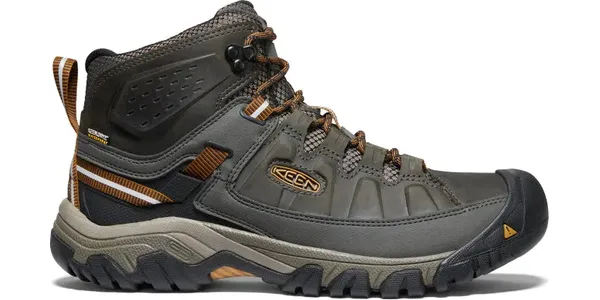
The upper is leather and mesh with a KEEN.DRY waterproof membrane and a toe bumper, according to KEEN. Paul Webster likes the big rubber rand that protects the toes.
Reviewers describe the leather differently. OutdoorGearLab says the nubuck is soft and flexible, giving the boot a shoe-like feel. But Tyler of Mountaineer Journey felt some discomfort on the outer side of the foot; he believes this is mainly due to the stiff nubuck pressing on his foot. Not a deal-breaker, he says, but annoying at times.
RunRepeat says the heel-capture system and ankle-hugging lace loops keep the heel from slipping once the laces are tightened.
On waterproofing, RunRepeat stayed completely dry wading puddles and streams, and no water got in when Mountaineer Journey submerged the boots for 10 minutes. But OutdoorGearLab gives a flood height of 3.75 inches (about 9.5 cm), notes many seams, and saw leaking at the front seams in a previous test. One Zappos buyer also had water soak in walking through wet grass. When crossing streams, pick spots shallower than about 9.5 cm.
On heat and moisture, reviewers say different things. RunRepeat measured breathability at 55 BR (RunRepeat's breathability score), above the 46 BR average, but only 16% of sweat evaporated (average 25%), so it takes much longer to dry than other boots, and the thick materials and padded tongue and collar trap heat.
Other reviewers found different things. Mountaineer Journey says it took longer than most boots to dry, due to the thick leather. TrekSumo, though, says they dry out fast but got damp feet on long hikes. OutdoorGearLab says they breathe reasonably well even in warm, arid high desert. Paul Webster prefers trail shoes without a waterproof lining in high summer, to keep cooler and dry faster.
In use: comfortable early for most, grippy when wet, but long-distance feel varies
The TrekSumo writer wore it on a hiking trip in northern England and says it was comfortable straight out of the box, the fit near perfect, with no blisters. The Fat Man Little Trail writer, in the low-cut Wide, went up to 13 miles without a problem. Paul Webster has bought many pairs of Targhees over about a decade and finds no other boots quite so comfortable.
Not everyone felt this way. Dan, a Zappos buyer, needed a couple of hours to break them in; after that they were quite comfortable, with good stability and ground feel. Mike, a big fan of the Targhee II, found the III far less comfortable. He says it's more rigid because the II's soft leather was replaced with rigid plastic, and he feels the lugs with every step; they don't hurt, but don't feel good either.
On grip, OutdoorGearLab felt secure from dew-covered grassy slopes to wet granite. Mountaineer Journey used it on mud, wet rock and gravel and up a steep snowy incline without slipping. RunRepeat says it sheds mud easily, and Live For The Outdoors calls the tread a little shallow compared with some other boots but found traction solid, with no complaints.
On long-distance feel, Mountaineer Journey found shock absorption a little disappointing while backpacking, and one Zappos buyer felt roots and rocks through the soles. TrekSumo, though, calls the insole very plush. RunRepeat found the insole isn't glued in, so custom orthotics can go in.
The roomy toe box also plays out differently. TrekSumo warns of slippage after long hikes, and one Zappos buyer's feet slid around on slopes. When trying them on, lace snugly and walk down a slope or stairs to see whether your foot slides forward.
The numbers: about 12 mm of drop and a thinner-than-average sole
KEEN lists a 12 mm drop (the difference in sole thickness between heel and forefoot) and a 135 mm shaft height on its Men's Wide product page, and RunRepeat measured a 12.9 mm drop, close to its 12.4 mm average. RunRepeat says there's no hard rule for drop in a hiking boot; it's a matter of preference.
RunRepeat measured the sole at 31.1 mm thick under the heel and 18.2 mm under the forefoot, thinner than its 36.0 and 23.5 mm averages, but still with adequate impact protection and a good sense of the ground underfoot.
Weight: KEEN lists 485 g per shoe but doesn't say for which size. Size-qualified figures: Live For The Outdoors lists 514 g per boot at UK 8.5, Paul Webster gives 575 g per boot at size 10.5, and OutdoorGearLab gives 2.38 lb (about 1.08 kg) per pair at US 11. RunRepeat calls it slightly heavier than the average hiking boot but never felt overly burdened, even on longer hikes. Compare weights with other boots only at the same size.
Roomy toes, standard midfoot
RunRepeat measured the toe box width at 106.4 mm, wider than the 101.9 mm lab average, but Mountaineer Journey felt a standard midfoot and heel. If the regular is tight through the midfoot, try the wide. If your shoes usually pinch only at the toes, you can start with the regular, because the toe box is already wide.
Drop shows height difference, not softness
Drop is about 12 mm, near average, but softness depends on both sole thickness and hardness. RunRepeat measured a sole thinner than average and much firmer than average. If you're used to thick, soft soles, stand and walk on a hard floor in them for a while before deciding.
Compare weight at the same size
Live For The Outdoors lists 514 g per boot at UK 8.5, and OutdoorGearLab gives about 1.08 kg per pair at US 11. Weight changes with size, so compare with other boots at the same size.
Trying it on, and what to look at if it doesn't suit
Wear the hiking socks you'll actually use, lace snugly and check whether the midfoot feels squeezed. Walk down a slope or stairs: if your toes slide into the front, it's still too loose. OutdoorGearLab suggests trying them with thinner socks if you'll mostly hike in warm weather, since the fit is on the wider side, the laces couldn't make it snug enough, and its testers often wore thick socks.
KEEN US offers 30-day returns; Thai shops may differ, so ask about size exchanges before you order.
If it's too hot, look at a better-ventilated boot or a trail shoe without a waterproof lining; too firm, a softer-soled boot; too loose at the toes, a boot with a snugger toe box; if you'll carry a backpacking pack or have ankle issues, a higher boot.
Size and width
On length, Mountaineer Journey (men's US 10.5, regular width) suggests not sizing up or down. Fat Man Little Trail (low-cut Wide) found KEEN's online fit guide accurate. Mike, a Zappos buyer, says the III runs half a size bigger than the Targhee II. If you've worn the Targhee II, try on your old size and half a size down.
On width, KEEN says the fit holds the heel and leaves room across the forefoot for toes to spread, and the wide version adds volume overall. TrekSumo calls it a wide-fit boot. Paul Webster, who has pronounced bunions, has never had trouble in Targhees. But one Zappos buyer says the forefoot is a good 1/4 inch (about 6 mm) narrower than previous versions. Tyler of Mountaineer Journey, whose feet are usually wide, managed in the regular but felt a standard fit in the midfoot and heel, and suggests the wide size for very wide feet.
When trying them on, check three things: toes move without pressing the sides, the midfoot isn't squeezed, and the heel doesn't lift walking uphill.
77.588.599.51010.51111.51213141516
mens-targhee-iii-waterproof-mid-black-olive-golden-brown · 2026-11-24 · Recorded sizes, not current stock