The details that matter
Foam and sole
The clog is made from the same Croslite foam as the Classic, which keeps it comfortable and light.
This model has no LiteRide insole, so there is no extra layer of foam under the foot. The cushioning you feel when walking comes from the clog's Croslite foam. If you want a softer footbed, try it on alongside a model with a LiteRide insole before deciding.
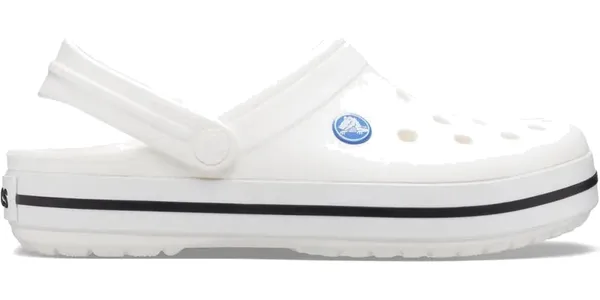
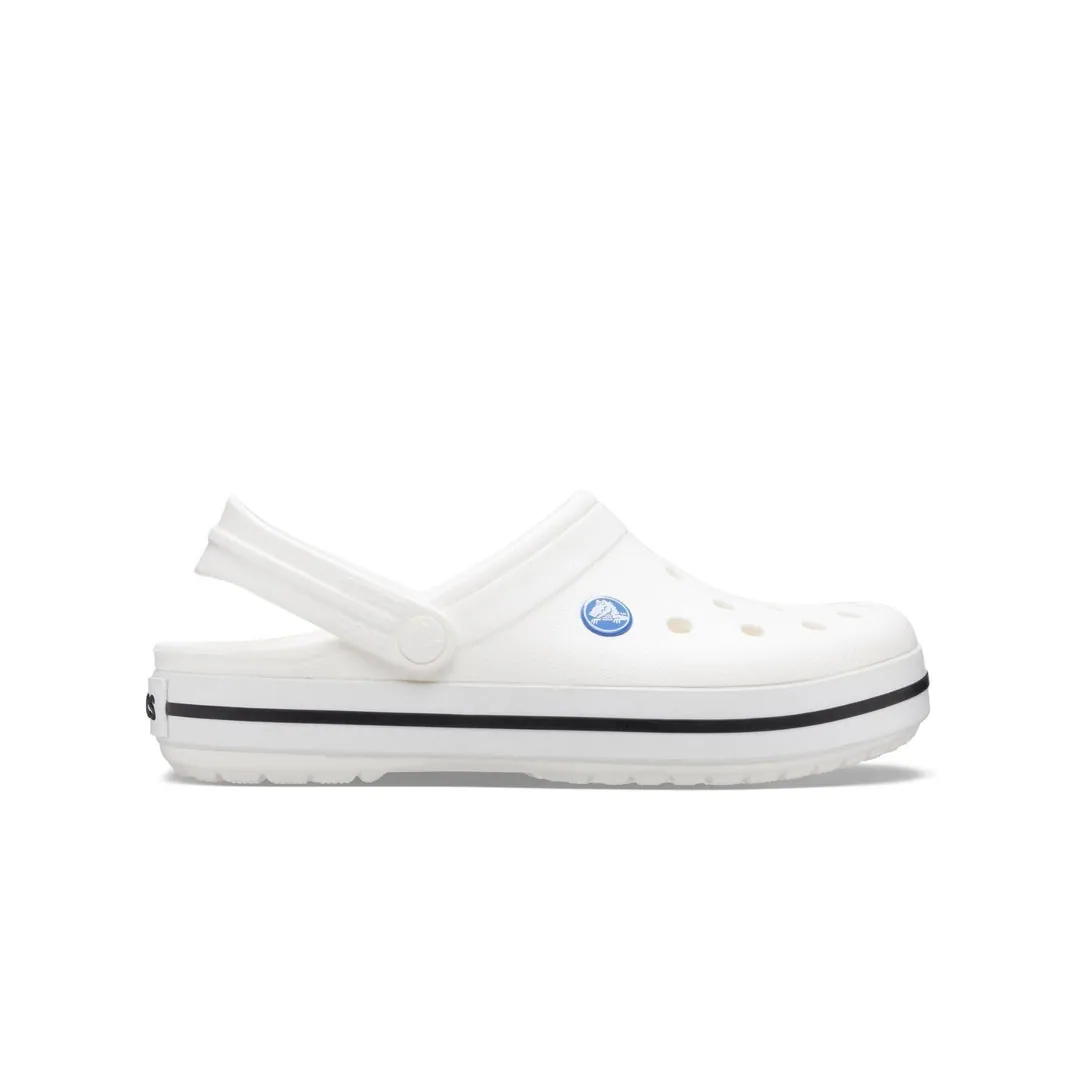
The coloured strip running around the midsole is the model's signature design feature and makes it look clearly different from the Classic.
Vents, heel strap and Jibbitz
Vent holes sit on top of the toe box like on the Classic, but there are none on the sides. As a result, airflow is lower than the Classic, and water or debris that gets in drains out more slowly.
On the plus side, the Workwear Command author suggests that having no side vents may help keep gravel and small rocks out when walking on gravel or other outdoor ground.
The back is an open heel with a pivoting heel strap. The holes in the upper hold up to 26 Jibbitz charms.
Everyday wear
The Workwear Command author, who owns nine Crocs clogs, says the Relaxed toe box gives the Crocband a casual, comfortable fit for everyday wear.
If hot weather is your main use, the same author suggests the Classic might be the more comfortable option, because it is lighter and has extra vents. The Crocband's selling point is its distinctive, sportier design.
Reading the weight figure
Workwear Command weighed a men's US 12 pair at 0.60 lb (about 272 g) per shoe. The Classic in the same size weighs 0.43 lb per shoe.
This weight applies to US 12 only. It is most useful for comparing against the Classic in the same size.
There are no drop or stack-height figures for this model. When you try it on in a store, stand and walk for a while to judge whether the sole supports your feet well enough.
Read weight at the right size
0.60 lb (about 272 g) is the per-shoe weight in men's US 12. It is clearly heavier than the Classic in the same size. If weight matters, pick up both models and compare when you try them on.
Check forefoot room
The Relaxed fit is a little narrower than the Classic but still wider than ordinary shoes. Wiggle your toes when trying it on; if the sides feel squeezed, try the Roomy-fit Classic for comparison.
Look at where the vents are
The Crocband has vents only on top of the toe box, none on the sides. If you will wear it in hot weather or around water often, a model with side vents will ventilate and drain better.
What to check when trying it on, and other options
When trying it on, wiggle your toes to check there is enough room, notice whether the sides of your foot feel squeezed, and walk with the heel strap up to make sure your heel stays in. If you can, try it next to a Classic in the same size to see the difference in width and weight straight away.
If the forefoot feels tight, or you want better ventilation, look at the Crocs Classic, which is a little wider, lighter and has side vents, or the Crocs Baya, which the Workwear Command author says offers better airflow than the Crocband.
Size and width
The Workwear Command author wears men's US 12 and found the length true to size. Side by side with Vans, Nike, New Balance, Adidas and other brands, the length was consistent.
For width, Crocs calls this a Relaxed fit, a little narrower than the Classic's Roomy fit, but the author stresses not to expect a narrow shoe: it is still wider than ordinary shoes. Comparing their own US 12 pairs, the author found the length very similar to the Classic and the overall width fairly similar too, so the difference was small for the author's feet.
The Crocs product page offers both women's and men's sizing; for the Black colourway it lists women's US 6–12.
M4/W6M6/W8M7/W9M8/W10M9/W11M10/W12M11M12
white · 2026-11-24 · Recorded sizes, not current stock