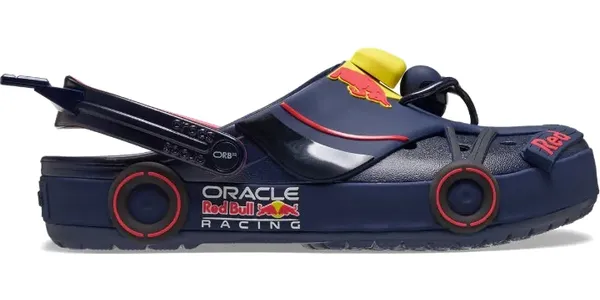
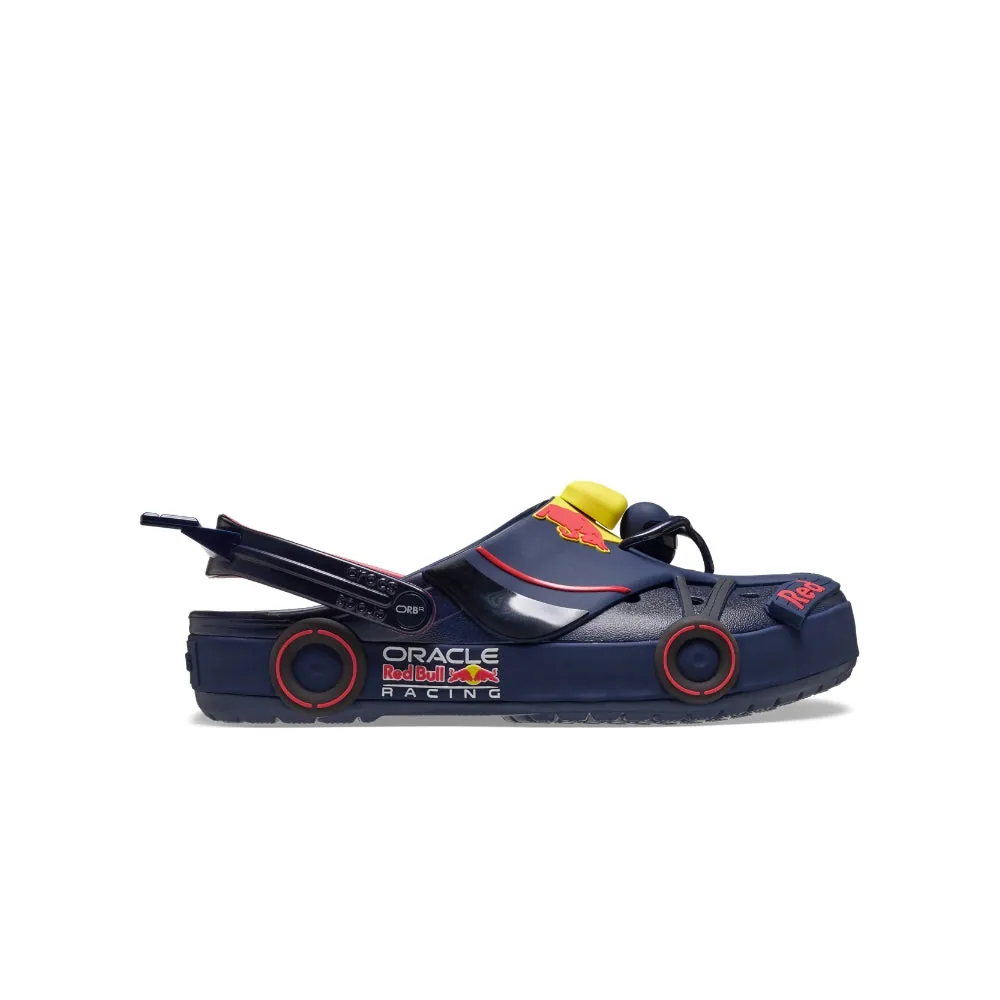
The details that matter
Made entirely of Croslite foam
The whole shoe is made of one material, Croslite foam, with no separate midsole, rubber outsole or plate as in a sneaker. CleverHiker and WalkJogRun explain that Croslite is Crocs' own EVA-type foam, and izreview and PackStack describe it as closed-cell. Several reviewers say the shoe is light, waterproof and quick to dry, and izreview adds that it floats. RTINGS confirms there is no plate. WalkJogRun says the sole is light yet thick enough to protect against sharp objects.
On grip, izreview says the sole gives traction and slip resistance on wet or uneven surfaces. PackStack was surprised by the traction while scrambling up to a high alpine lake in Colorado. CleverHiker and PackStack both say traction was better than expected but nowhere near as good as some other camp shoes; for lounging in camp it is perfectly adequate. PackStack calls the tread basic and not designed for off-road use.
The biggest watch-out is that a worn tread becomes very slippery on wet hard surfaces such as polished garage floors and river rock. One Zappos wearer advises checking the tread the way you would a car tyre.
On durability, CleverHiker bent, twisted and squeezed the shoe and found the material elastic but able to hold its shape. The izreview writer has worn and washed a pair many times over three years, and the colour and shape are still intact. izreview warns that hot water can warp Croslite, and some customers report that the shoe shrinks in sunlight. Crocs states that the shoe uses 25% plant-based material (calculated by a method certified by ISCC PLUS).
A vented upper that drains well; opinions differ on heat
The upper is Croslite foam like the sole, with vent holes on top of the foot and along the sides. izreview says these holes help airflow, reduce sweat and let water drain easily. In an ankle-deep stream crossing, CleverHiker liked how the side holes let water out; their feet felt dry in just under 10 minutes.
On heat, CleverHiker and PackStack found it not very breathable, while a wearer quoted by WalkJogRun says it keeps their feet very cool. If your feet run hot, walk around in a pair for a while before you decide. One Zappos buyer is looking for a pair without vent holes for winter and rainy days.
At the back, a pivoting heel strap can sit behind the heel so the shoe does not slip off easily, or rest across the front so you can slide in and out like a sandal. Some buyers quoted by WalkJogRun say the strap may rub where it meets the shoe, and the shoe can squeak now and then. Crocs says the holes in the upper hold up to 26 Jibbitz charms.
Comfortable for standing and strolling, less so for purposeful walking
Soft comfort is this clog's main strength. PackStack says that after a six-mile day in stiff trail runners, slipping into a pair feels immediately therapeutic. CleverHiker felt the footbed meet their arches and the foam let their feet sink in. RTINGS scores cushioning at 3.9 out of 10, but that comes from running-shoe tests, a different question from how soft it feels when standing or strolling.
PackStack says the small nubs on the footbed are designed to massage your feet as you walk. CleverHiker, though, found the textured footbed irritating on feet worn out by a long day of hiking in boots.
Problems show up once you walk fast. CleverHiker found good support when standing still but not the best when walking around, and could not depend on the clogs while fast-walking through a busy airport. PackStack concludes that neither strap position holds the foot well enough for walking with any purpose.
Reports on standing all day also differ. A Zappos wearer who works at a marine aquarium says they are comfortable through a full day of stairs and stepping in and out of water, while another says comfort drops by the end of the day, and after an eight-hour day they still get just as many sore spots and calluses.
Reading the numbers: 7.5 mm drop, size-dependent weight
RTINGS measured the sole at 22.6 mm under the heel and 15.1 mm under the forefoot, giving a drop (the difference in sole thickness between heel and forefoot) of 7.5 mm, close to the 8 mm the maker advertises. This number tells you how much higher the heel sits than the forefoot, not whether the shoe will feel comfortable for you; stand and walk in it to judge that.
Weight depends on size. PackStack lists about 318 g per pair in size M6/W8 and says a pair weighs 300–450 g depending on size. RTINGS weighed 178 g but did not state the size. When comparing with other shoes, compare the same size and check whether the figure is for one shoe or a pair.
RTINGS scored lateral stability at 8.4 out of 10 and measured the outsole at 110 mm wide at the forefoot and 86 mm at the heel. Its energy return score is 0.8 out of 10. In practice, the sole is wide and stable to stand on, but it does not give the springy push of a running shoe.
Try both strap positions
Walk with the strap behind your heel; if your big toe hits the front, try a size up. Then fold the strap forward and take quicker steps; if your heel slips out, plan to use the strap or try a smaller size. PackStack suggests your regular size without the strap and a size up with the strap behind the heel.
Reading drop and sole thickness
RTINGS measured 22.6 mm under the heel and 15.1 mm under the forefoot, a 7.5 mm drop. This only tells you how much higher the heel sits; to judge softness, stand on a hard floor in the shoe for a while.
Compare weight at the same size
PackStack lists about 318 g per pair in size M6/W8, and 300–450 g per pair across sizes. When comparing with other shoes, check the size and whether the figure is for one shoe or a pair.
Try both strap positions
When you try the shoe on, walk with the strap behind your heel and with it folded forward. If your big toe hits the front with the strap on, or your heel slips out on quicker steps with the strap forward, try another size. If your feet are narrow, check whether your foot slides around inside.
If this clog is too loose, or you want something you can walk further in, compare it with camp shoes that hold the foot more firmly. CleverHiker found the Merrell Hydro Moc similar in look and use, but it fit better, felt more supportive and was more comfortable. One RTINGS commenter replaced their Keen hybrid shoes with Crocs, but still keeps a pair of Keens for especially muddy or adventurous kayak trips.
Fit: roomy, and it depends on how you use the strap
The Classic Clog uses unisex sizing with a roomy shape; PackStack places it in Crocs' widest fit category. In the pair RTINGS tested, the internal width was 99 mm at the forefoot and 74 mm at the heel.
In the poll on Crocs Singapore's product page, 69% say the length is true to size, 19% say it feels large and 81% say the width is true to size. Zappos' fit survey shows 75% true to size and 85% true to width.
Your size choice depends on the strap. PackStack recommends your regular size if you will wear it without the strap, and a size up if you keep the strap behind your heel. izreview says many people size down for a snugger fit. Zappos buyers chose differently: one sized down and it worked well, another sized up to leave room for socks, and another sized up because it felt a little small. There are no half sizes, so if you are between sizes, try on both.
One wearer with EE-width feet says it is wide enough and not tight on top of the foot, and several wearers with bunions say the toe box has room to spare. If the standard version feels tight, a wide version is available to try on. For narrow feet, one Zappos wearer cautions that it may not fit. Another found that two pairs of the same size, one made in Mexico and one in China, differed noticeably in size. If you buy online, check the exchange policy first.
Multi M4/W6Multi M5/W7Multi M6/W8Multi M7/W9Multi M8/W10
unisex-red-bull-racing-crocband-clog-0198445450129-21270790h-multi · 2026-11-24 · Recorded sizes, not current stock