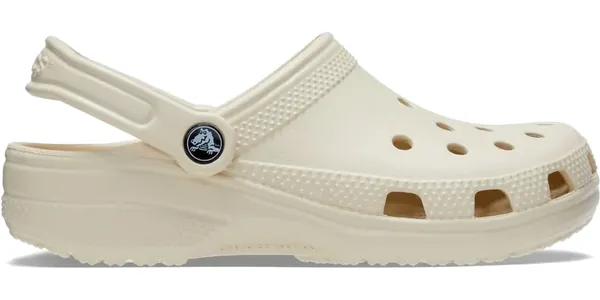
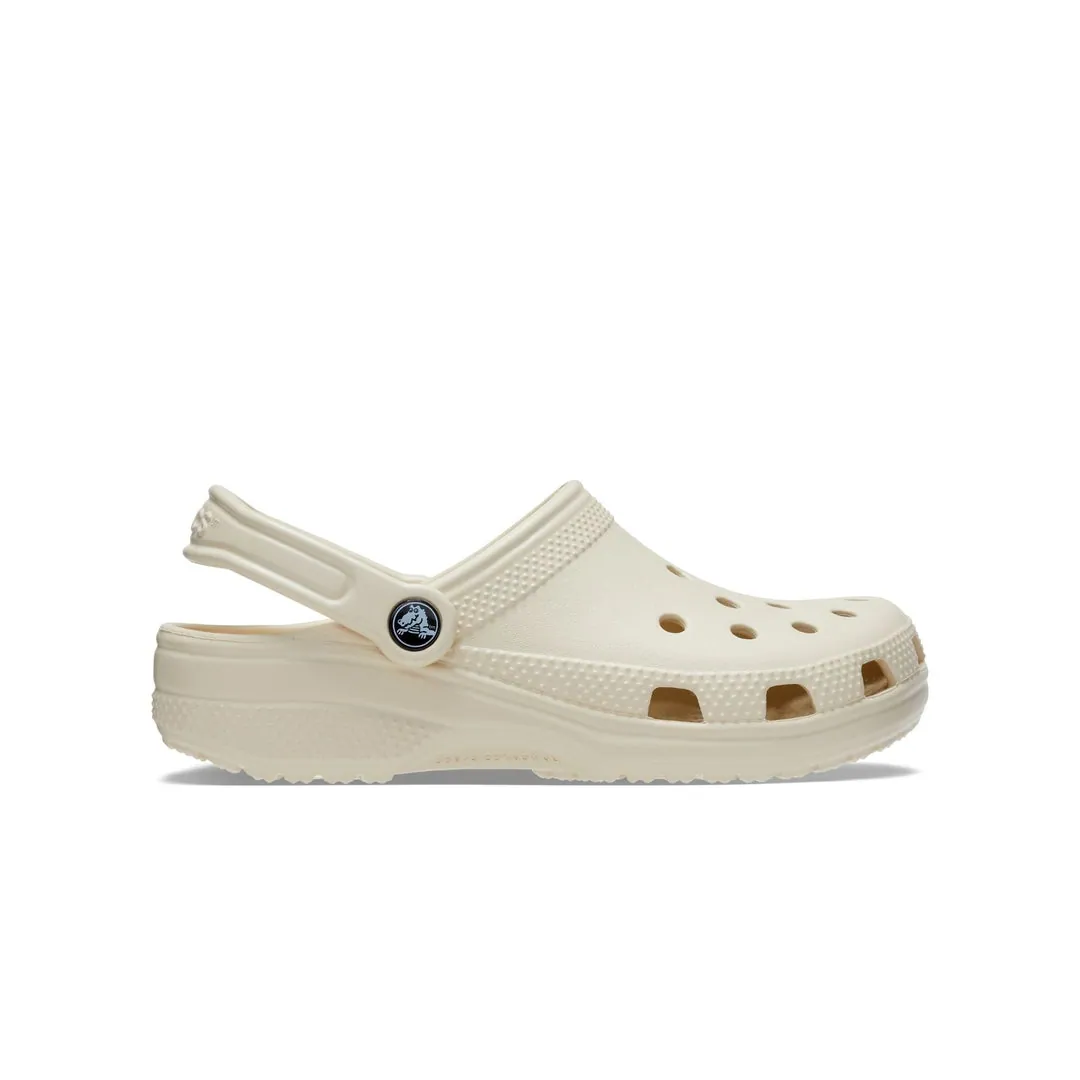
The details that matter
The sole: one piece of foam from sole to upper
The sole and the upper are a single piece of Croslite foam. CleverHiker describes it as a type of EVA, and WalkJogRun as an injection-moulded EVA foam. OutdoorGearLab notes it is closed-cell, does not absorb water, and has no seams or stitching that could break down in wet environments. Gulf News cites product specifications saying there are no seams or glued sections that could wear over time.
The footbed is moulded into the shoe and cannot be removed. Its surface has small raised nubs meant to massage your feet as you walk. OutdoorGearLab found the sole thick enough to block the harshest pokes from uneven ground while staying soft and flexible enough to give some feel for what is underfoot. Sharp objects such as thorns, metal or glass can puncture it.
The outsole is the same foam rather than traditional rubber, with a basic tread. OutdoorGearLab says it grips decently on dry and moderately wet surfaces such as pool decks, lawns and sandy beaches, but struggles on smooth wet surfaces. Packstack adds that once the tread wears down, the soles can be very slippery on hard wet surfaces like polished garage floors and river rock.
Crocs states the shoe is made with 25% bio-circular material, calculated with a mass balance approach certified by ISCC PLUS.
The upper: vent holes, a closed toe and a pivoting heel strap
The upper is the same Croslite foam as the sole, with vent holes on the top and sides and an open back at the heel. The holes let water drain out and air move through. The toe is closed, so it protects your toes better than sandals or slides.
Reviewers disagree on breathability. Gulf News says air moves more freely than in closed trainers, so less heat builds up on errands, and WalkJogRun calls it the champion for breathability. CleverHiker and Packstack, however, found it not especially breathable in testing. Both agree it dried faster than some of the water shoes they tested alongside it.
The heel strap pivots. Flip it forward over the toe and the clog slips on and off like a sandal. Swing it behind your heel (Packstack calls this sport mode) for a more secure fit while walking. Some buyers quoted by WalkJogRun say the strap can rub where it joins the shoe, with occasional squeaking.
The holes on top accept Jibbitz charms. Crocs says the clog holds 26 of them.
In use: very comfortable standing and strolling, loose when you walk fast
It is at its best when you are standing or strolling. Nearly every reviewer describes it as soft and light underfoot, and comfortable all day for casual wear. Packstack says that after a six-mile (about 10 km) day in stiff trail runners, slipping into a pair feels immediately therapeutic. CleverHiker felt the footbed meet their arches and the foam let their feet sink in.
The massage nubs divide opinion. OutdoorGearLab says they are designed to massage your feet as you walk, while CleverHiker found they irritated feet already sore from a long day of hiking in boots.
The loose fit shows when you speed up. With the strap flipped forward over the foot, CleverHiker hurried through Dallas Fort Worth airport to catch a flight and found the shoes did not stay on well, with their feet moving all around inside. CleverHiker concluded the clog gives good support when standing still but is not the best when walking around. SoleFeed agrees that the loose heel and simple support are not ideal for fast walking or long city distances.
Around water it handles light use well. OutdoorGearLab enjoyed it on casual paddleboarding trips because it drains easily and dries quickly, but says river crossings, rocky shore scrambling or active water sports that need traction and a secure fit call for a shoe with a more serious outsole. Packstack says it is genuinely useful for crossing an ankle-deep stream and walking back to camp, but for serious river crossings or heavy-duty stream crossings the loose fit becomes a real liability.
On rock, results depend on the surface. Packstack was surprised by the traction when scrambling up to a high alpine lake in Colorado. OutdoorGearLab found it relatively secure on dry rock, though far from the best, but did not feel very secure on wet mossy rocks. Gulf News cites RTINGS: its strengths are comfort and cushioning, not athletic performance.
Numbers worth knowing: pair weight and platform height
Weight is the most useful number here. OutdoorGearLab measured 310 g per pair in US size 9. CleverHiker lists 11.2 oz per pair, about 318 g, or roughly 159 g per shoe. Packstack also lists about 318 g per pair, in men's 6 / women's 8. izreview lists about 300 g per pair and notes it varies by size. WalkJogRun lists 6 oz (about 170 g) per pair, close to half the other figures, so rely on the measured weight. Packstack calls the weight competitive but not the lightest among camp shoes.
WalkJogRun puts the platform at about 0.75 in (roughly 19 mm) and gives no drop figure (the difference in sole thickness between heel and forefoot). When you try it on, stand and notice how much higher your heel feels than the front of your foot.
Weight: check per pair or per shoe, and which size
The weights in the numbers section are per pair. To compare with a shoe listed per shoe, halve them first, and compare at similar sizes.
Platform: about 19 mm, soft but with some ground feel
OutdoorGearLab found the sole thick enough to block the harshest pokes from uneven ground yet still flexible. When trying it, stand and walk on uneven ground. If you will be around thorns or glass, watch out for sharp objects, because they can pierce the foam.
Strap and size: decide how you will wear it first
If you will mostly wear the strap forward, Packstack suggests your regular size. If you like the strap behind your heel, try one size up, because the strap pushes your foot forward. Half sizes should try both sizes and decide whether they prefer a looser heel or toes closer to the front.
How to try it on, and what to look at if it does not suit you
Try it both ways. First, flip the strap forward over the toe and take a few steps to see how much your heel slips or your foot slides around. Then swing the strap behind your heel and check whether your big toe touches the front. Walk a little faster to see whether the clog stays with your foot. If you plan to wear thick socks, bring them to the fitting.
If it is too loose for what you plan to do, look at water shoes or outdoor strap sandals that hold the foot more securely and grip better. Within Crocs, izreview says the Crocband Clog is heavier, vented on top only and less roomy than the Classic, and SoleFeed sees the Echo Clog as a bulkier shape.
Size and fit: very roomy, loose at the heel, and split sizing advice
The Classic Clog is very roomy. Packstack places it in Crocs' widest fit category. The toe box is wide, your toes can spread out, there is space for socks, and it accommodates feet swollen after a hike. A buyer with wide feet quoted by WalkJogRun found them super comfortable. WalkJogRun also says the foam softens with body heat and shapes itself to the foot.
The cost of that room is a loose heel. Without the strap, the clog fell off a CleverHiker tester's feet. With the strap behind the heel, their foot was pushed forward a couple of centimetres and the big toe hit the front.
So sizing advice is split. Packstack says buy your regular size if you will wear it without the strap, and a size up if you prefer the strap behind the heel. izreview says many people size down for a snug fit. SoleFeed says half-size wearers must choose between extra heel movement and toe contact. Crocs uses unisex sizing, offered in men's and women's sizing, and recommends following its size chart. The izreview author accidentally ordered one size larger and still found them comfortable enough. The Refinery29 author, a US women's 5, wears kids' sizing instead.
M3/W5M4/W6M5/W7M6/W8M7/W9M8/W10M9/W11M10/W12M11M12M13
bone · 2026-11-24 · Recorded sizes, not current stock