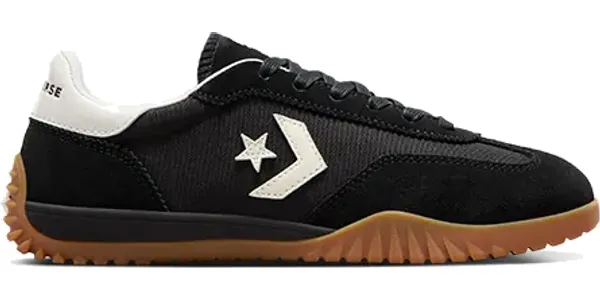
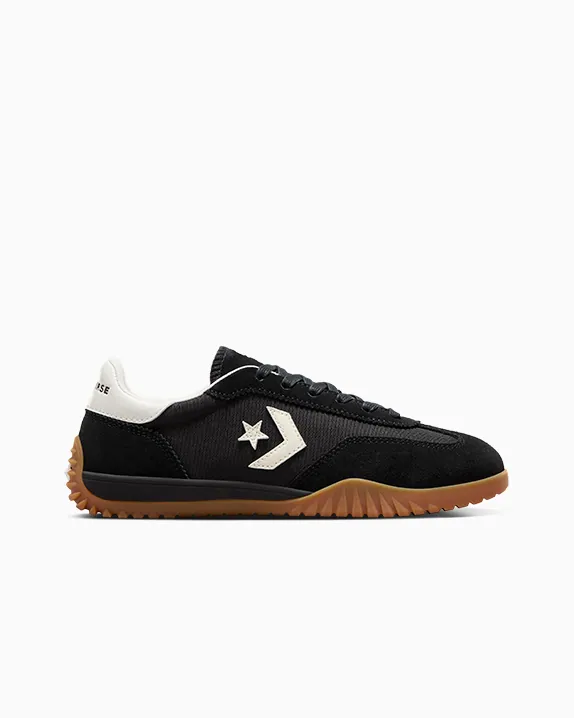
The details that matter
What is underfoot: a thick insole, a thick rubber outsole and no midsole
This shoe has no midsole (the foam cushioning layer between the rubber and your foot that running shoes have). RunRepeat found that all the cushioning comes from the insole. It is a 6.3 mm memory-foam insole, thicker and softer than usual, and it is removable, so you can swap in your own. Converse describes it as three-layer memory foam that forms to your foot.
Under the insole is a 7.8 mm rubber outsole, 31% thicker than average. RunRepeat explains that the brand used a thick outsole instead of a midsole to protect your feet from hard city surfaces. The rubber's hardness measured 85.0 HC (a unit of rubber hardness), close to average; RunRepeat says this level usually indicates a balance of durability and grip. In its small rotary-tool abrasion test the outsole lost 1.0 mm, about as durable as the average shoe.
The sole bends and twists very easily. In RunRepeat's older test method, the force needed to bend it to 90 degrees was 51% below average, and it scored only 1/5 for torsional stiffness. The sole base is also narrow, 99.7 mm at the forefoot and 70.8 mm at the heel. RunRepeat concludes that if you want a supportive shoe, this is not it. The upside is a light shoe that bends with your foot when walking.
The upper: real suede, nylon that does not stretch much, and little airflow
The main upper is nylon with suede overlays and leather accents. RunRepeat burned a sample of the suede and confirmed it is real. It has punched eyelets, waxed laces and Star Chevron, All Star and Converse logos, and RunRepeat praises it as a high-quality design.
The rough nylon does not stretch much, so Solefeed says whether it fits comes down mainly to the width of your foot. The upper is solid with no ventilation holes. In RunRepeat's smoke test none of the smoke escaped for 10 seconds, earning a 1/5 for breathability. If your feet run hot or you walk in the sun for long periods, keep this in mind.
The tongue is only 3.8 mm thick and is not stitched to the sides. RunRepeat's team found it slid a little from side to side during wear, and the waxed laces could not hold it in place, which the team found a bit annoying. The upside of this tongue is easy entry, even without a heel pull tab.
The heel counter (the stiff structure wrapping the heel) is fairly soft, scoring 2/5 in a thumb-press test, though a rubber extension of the outsole helps the heel keep its shape a little. For durability, the toe area of the upper scored a full 5/5 in the abrasion test, but the heel padding scored only 1/5. If heel linings tend to wear through quickly for you, note this. There are no reflective strips.
How it feels: comfortable for town walks, but not an all-day shoe
RunRepeat's team found town walks comfortable from the first time they put it on, because the shoe is light and flexible and does not weigh their feet down. Solefeed sees it as more cushioned than a classic Chuck, and owners summarized by Solefeed call the cushioning balanced rather than plush. Solefeed recommends it for casual outfits and light daily walking.
Both sources agree on its limits. RunRepeat says it is not for all-day wear; Solefeed says it is not for long-distance walking. Comfortable on light walks around town and comfortable all day are different things.
The sources disagree on the first days of wear. RunRepeat says there is no painful break-in period, but owners summarized by Solefeed say it needs some wear before snug spots relax, and that loosening the laces noticeably helps.
RunRepeat tested side-to-side movement and found the shoe is not built to support your ankles, and it is not a shoe for sports, despite its sporty style and heritage.
Reading the numbers: a thin sole, a low drop and a light build
RunRepeat measured the sole at 17.2 mm under the heel and 13.7 mm under the forefoot. The heel average RunRepeat compares against is 30.5 mm, so this shoe is 42% thinner than average and keeps your feet very close to the ground.
The drop (the difference between sole thickness under the heel and under the forefoot) is 3.5 mm, which is very low: heel and toes sit at almost the same level. RunRepeat explains that a flat sole like this makes the ankle and calf muscles work a little harder than the hips and knees. If you are used to thick-soled shoes with a raised heel, walk on a hard floor for a while before deciding.
RunRepeat gives two weights: 333 g in its table and 322 g in the review text, 18% lighter than average. RunRepeat does not say which size it weighed, so compare it in your hand with your current pair when you try it on in store. RunRepeat's team found the shoe light on their walks.
Check width before length
RunRepeat measured the interior width at the widest point at 85.4 mm and toe-box width near the big toe at 64.9 mm, both narrower than average, and the nylon does not stretch much. Try your usual size against half a size and one size up, lace snugly and check whether the sides of your foot are squeezed.
Thin sole, low drop
The sole is 17.2 mm under the heel and 13.7 mm under the forefoot, a 3.5 mm drop, with no midsole; the insole provides all the cushioning. Walk on a hard floor in the store for a while, especially if you are used to thick-soled shoes.
Compare the weight in your hand
RunRepeat gives two weights, 322 g and 333 g. Compare it in your hand with your current pair when you try it on in store.
What to check when trying it on, and what to look at if it does not suit you
Lace up snugly as you normally would, then check three things: whether the sides of your forefoot and midfoot are squeezed, whether your toes can still move, and whether your heel stays put as you walk. If you size up, also check that the extra length does not let your foot slide. Walk on a hard floor in the store to see whether this thin sole is comfortable enough for you, and walk for a while to see whether the tongue slides enough to bother you.
If it is too narrow, look for a low-profile retro sneaker with a wider forefoot or a wide version. RunRepeat measured this shoe as 5 mm narrower than the adidas Samba, yet one owner who found the Samba and Gazelle too narrow said this shoe fit perfectly, so try them on side by side. If you prefer a cleaner look, Solefeed sees the Puma Palermo as a flat sneaker with a simpler design. For long-distance walking, Solefeed says a dedicated comfort running shoe would do better.
Size and fit: very narrow, and most advice is to size up
Every source agrees this shoe is narrow, but they differ on how much to size up.
Converse Thailand's product page says the toe shape is fairly narrow and recommends going up 1 size from your usual. Solefeed says it is often narrow through the midfoot and forefoot and that many go up half a size, especially with a wider forefoot, while narrow or average-width feet can stay true to size, which may leave a little extra length. On RunRepeat, 29 user votes say it runs slightly small.
RunRepeat's measurements show where it is narrow. RunRepeat measured the interior width at the widest point at 85.4 mm, one of the narrowest it has recorded in casual sneakers and too snug for a D (medium) width. Toe-box width near the big toe measured 64.9 mm, narrower than average, while height above the toes was 27.1 mm, about average, leaving decent room for the toes to move up and down.
Owner experiences differ. Owners summarized by Solefeed call it tight across the width even on narrow feet, while one owner who found the adidas Samba and Gazelle too narrow said this shoe fit perfectly. Your best move is to try your usual size against half a size and one size up, and check the exchange policy before ordering online.
BLACK US 4BLACK US 5BLACK US 6BLACK US 7BLACK US 8BLACK US 9BLACK US 10BLACK US 11
run-star-trainer-a08263cu-f4bkcm · 2026-11-24 · Recorded sizes, not current stock