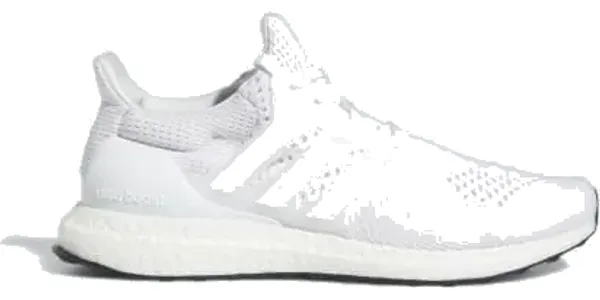
The details that matter
Underfoot: Boost foam and Continental rubber
The midsole is full-length Boost foam, made from TPU. RunRepeat measured it at 19.9 HA, softer than average foam. The softness is clearest when walking; at running pace the foam feels a little firmer, though not firm.
RunRepeat measured 122 SA of shock absorption at the heel but only 89 SA at the forefoot, and the sole is 91.1 mm wide at the heel, giving a generous landing zone. RunRepeat says the shoe is designed for heel strikers, while SneakerLens says the 10 mm drop favours heel strikers.
Inside the foam sits the Torsion System, a plastic shank linking heel and forefoot. SneakerLens says it helps stop the foot twisting, but RunRepeat measured the sole as very easy to twist (1/5) and so easy to bend that it ranks among the top 2% most flexible shoes it has measured. If you like a sole that bends with your foot, that is a plus; if you want a stable sole, twist the shoe in the store.
The outsole is Stretchweb with Continental rubber, which adidas says flexes naturally. RunRepeat measured 4 mm of rubber, harder than average (86.1 HC), losing only 0.64 mm in its machine abrasion test. SneakerLens says it grips well on wet city surfaces and notes that early versions used small rubber nubs that wore quickly; the user comments SneakerLens summarises also include complaints that the rubber wore down too fast.
If you choose white, expect Boost foam to be hard to clean and to yellow over time.
Upper: a snug, very breathable Primeknit
The upper is a single piece of digitally knitted adidas Primeknit that hugs the foot like a sock. Large ventilation holes sit in the toe box and midfoot. RunRepeat's smoke test gave it 5/5, with only a handful of shoes doing better, and SneakerLens calls it suited to warm climates and office wear.
A three-stripe plastic cage at the midfoot doubles as the lacing cage and holds the foot in place. There is no full heel counter (the stiff shell around the heel); two plastic pieces support the sides of the heel instead. RunRepeat rated heel stiffness 3/5, slightly stiffer than average, with no heel slippage, and SneakerLens says the lockdown is secure without feeling trapped.
The tongue is 10.9 mm thick, almost double the average, and feels very soft on the instep. The bootie shape can be tricky to slide into; the extended heel collar helps when putting it on and taking it off. SneakerLens summarises the most common fit complaint as a tight collar opening and pressure across the top of the foot.
The weak point is the knit at the toe box. RunRepeat's abrasion test destroyed it quickly, scoring 1/5, and one wearer found the stitching separated on the outer left toe area. SneakerLens warns that tennis or basketball will rip through the sides, and that for tennis or HIIT with side-to-side jumping the knit offers zero support, so you risk rolling your ankle.
Walking and running feel different
Walking is where the shoe does best. RunRepeat says the softness is most noticeable on walks, SneakerLens recommends it for daily walking, urban commuting and travel, and YouTube commenters call it good for commuting and trips out of town.
For running, opinions differ. RunRepeat found the Boost foam boring in all its test runs, too heavy, and lacking energy return for high-mileage runners, yet still recommends it for walking and light jogging. SneakerLens describes the ride as springy and responsive, but warns against buying it for 20-mile (about 32 km) long runs because it is heavy and lacks the energy return of modern foams. Users summarised by SneakerLens also say the weight makes it feel sloppy for fast running.
Wearers' running experiences range from pain within the first two runs to pairs used for running over several years.
SneakerLens says people who overpronate significantly may find the soft Boost unstable, as the shoe has no medial support. For night runs, note there are no reflective elements.
Reading the numbers: weight, drop and stack
Weight: adidas lists 322 g, RunRepeat weighed 320 g, and SneakerLens gives about 320 g for a standard men's size. RunRepeat calls it substantially heavier than the average running shoe, citing the ASICS Novablast 3 at 242 g with a higher stack. One wearer who bought it for casual wear and travel calls it light. When trying it on in a store, lift it alongside other shoes.
Drop (the difference between heel and forefoot sole thickness): adidas states 10 mm, but RunRepeat measured 14.2 mm, among the steepest it has recorded.
Stack height: adidas states 22 mm at the heel. RunRepeat measured 34.4 mm at the heel and 20.2 mm at the forefoot. The gap is large because RunRepeat follows World Athletics guidelines, which include the insole and outsole, while adidas measures only the foam at a different point. SneakerLens uses approximately 22 mm at the heel and 12 mm at the forefoot.
These numbers mean the forefoot is thin compared with the heel; RunRepeat says it feels really low. If you land on your forefoot, jog a few steps in the store before deciding. The insole is 3.7 mm thick and removable.
Check the drop and forefoot cushioning
adidas states a 10 mm drop, but RunRepeat measured 14.2 mm and only 20.2 mm under the forefoot. When trying it on, stand and notice whether the heel feels clearly raised, then jog a few steps to feel how hard the forefoot lands, especially if you are a forefoot striker.
Check the weight in your hand
adidas lists 322 g and RunRepeat weighed 320 g. Lift it alongside other shoes when trying it on in the store.
Check the collar and the top of your foot
SneakerLens says the upper is narrower than average at the ball of the foot, and that the most common fit complaint is a tight collar opening and pressure on the top of the foot. Lace it snugly and walk for a while. If it's snug but not painful, the knit usually relaxes after a few wears. If you have wide feet, compare half a size up.
How to try it on before buying
When trying the shoe on, wear your usual socks, lace it snugly and walk around for a while. Check for side pressure around the base of your toes, whether your toes can move, and whether the heel stays put. If it feels snug but not painful, the knit usually relaxes after a few wears. If it hurts from the start, try half a size up and check the length isn't too long. If you plan to run in it, jog a few steps to feel how hard the forefoot lands, and check the store's exchange policy before buying.
Size and fit
RunRepeat lists it as true to size. SneakerLens also says true to size, but suggests half a size up for wider feet.
RunRepeat measured the upper at its widest point at 95.9 mm, narrower than average, but says the big-toe area leaves plenty of room for the toes (76.2 mm). The knit stretches: after a few runs or walks, RunRepeat found the shoe really spacious. SneakerLens says it feels snug at first but isn't painful, and settles after a couple of runs or a few longer walks. SneakerLens also says that if you size up, the stretchy upper accommodates bunions and wide feet better than stiff leather sneakers. At the heel, RunRepeat had no slippage.
Wearers don't agree on size. One says everyone recommended true to size but they had to size up. Another can't decide: half a size up leaves too much length, but they don't like the feel without the insole. One wearer with wide feet owns three pairs and finds the Primeknit very comfortable, while another, who already had serious foot problems, says the elastic upper made the tops of both feet swell, made their feet sweat a lot, and caused water blisters after one day of wear.
The adidas Thailand product page lists Regular width only, while RunRepeat's spec table lists a wide width. If you need a wide version, ask the store before ordering.
6 UK6.5 UK7 UK7.5 UK8 UK8.5 UK9 UK9.5 UK10 UK10.5 UK11 UK11.5 UK12 UK12.5 UK13.5 UK14.5 UK
HQ4202 · 2026-11-24 · Recorded sizes, not current stock